Surfing in Tokyo: discover the best spots to ride the Japanese waves
Where to surf near Tokyo? The must-visit spots in the region
The Tokyo area is full of quality spots, accessible by public transport or by car. Each area has its own characteristics, offering remarkable diversity for all skill levels.
Chiba Prefecture, the stage for the Tokyo Olympics
Without a doubt, Chiba Prefecture is the heart of surfing in Japan. It was here that the Tokyo 2021 Olympics took place, definitively acknowledging this region as a global reference. Ichinomiya, the spot chosen for the Olympic competitions, saw the greatest names such as Carissa Moore, Gabriel Medina, John John Florence, Jeremy Flores, and Johanne Defay compete in exceptional conditions.
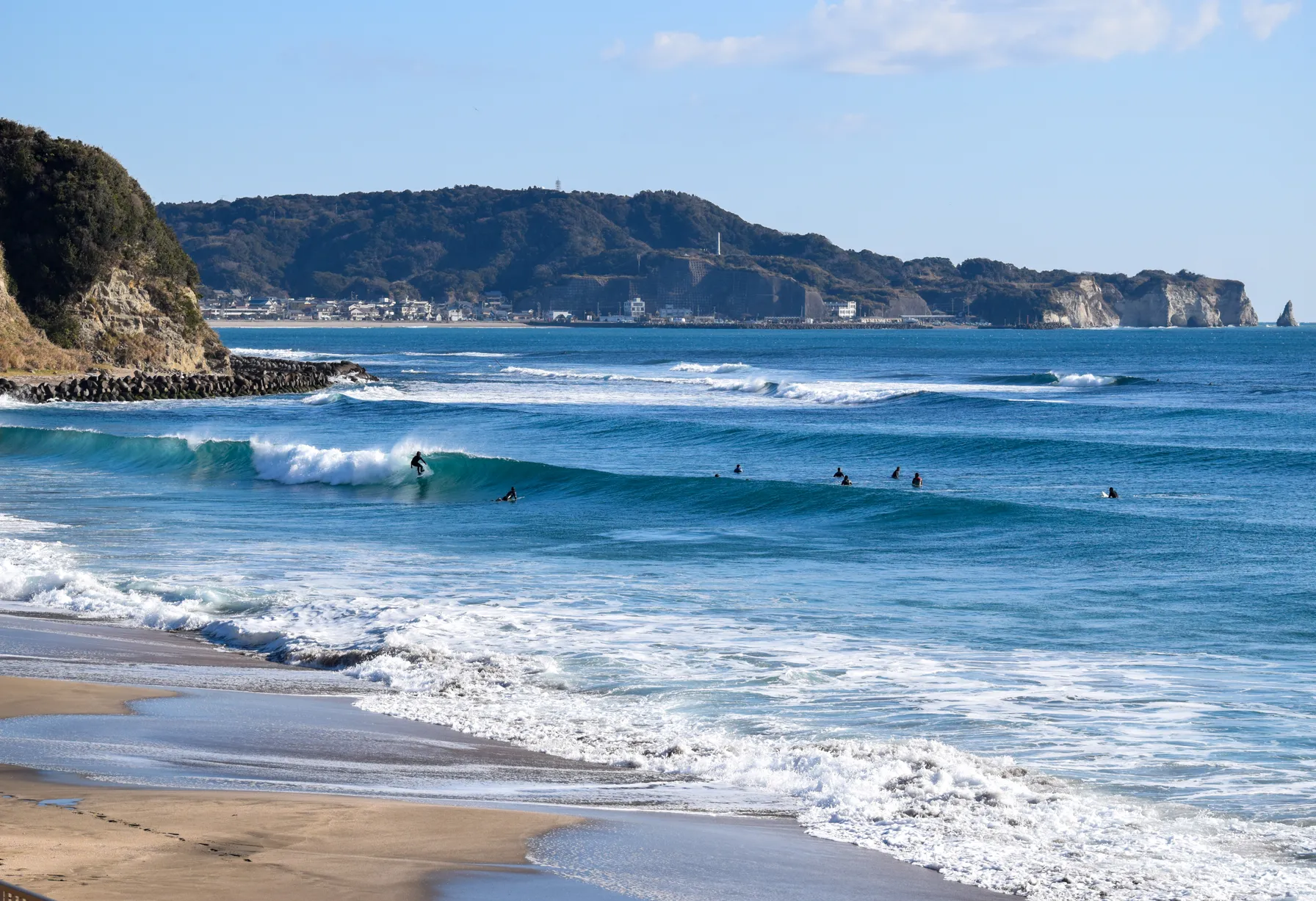
Ichinomiya is distinguished by its consistent waves and proximity to Tokyo, just an hour by train. The spot primarily offers beach breaks that work with south and east swells. The waves are regular, allowing surfers of all levels to progress in a stimulating environment. The organization of the Olympic surf events has also helped to improve local infrastructure, with changing rooms and a clubhouse open to the public.
Onjuku is a quieter alternative, known for having the warmest waters in the prefecture. This beach break offers more accessible conditions, ideal for families wanting to learn to surf in a secure environment. The beach has recognized surf schools and complete equipment rental services.
Hebara Beach attracts experienced surfers, especially in winter when north swells generate powerful waves. This more technical spot requires some experience but rewards surfers with memorable sessions.
Book your Tokyo surf trip now
Kamakura and Enoshima, Japanese authenticity
45 minutes away from Shibuya, Kamakura perfectly combines traditional culture and quality surfing. Zaimokuza Beach becomes the playground for Tokyo surfers as soon as the swell picks up. This historic spot provides a unique experience, set against a backdrop of ancient temples and the tranquil atmosphere of the old capital.
The conditions at Zaimokuza vary with the seasons, but the spot works especially well with the summer and autumn swells. The proximity of rental centers and surf schools makes organizing your session easy. Several establishments offer boards suitable for all levels, as well as wetsuits for cooler waters.
Enoshima features two distinct beaches: Katase Higashihama and Katase Nishihama. These spots offer a unique view of Mount Fuji on clear days, creating an absolutely magical setting for your morning sessions. The vibe remains more relaxed than in Tokyo, especially if you extend your stay overnight.
The waves at Enoshima are perfectly suited for intermediate surfers, with conditions generally less challenging than in Chiba. This accessibility makes it a favored destination for families eager to experience Japanese surfing in complete serenity.
Shimoda, the challenge for experienced surfers
For those seeking more intense sensations, Shimoda offers two spots renowned for their impressive waves. Shirahama and Tatadohama are located on either side of this coastal town, offering varying conditions depending on the swell direction.
These spots require experienced surfers, as the waves can reach considerable sizes and present technical sections. Shirahama particularly performs well with southern swells, while Tatadohama captures the eastern swells better. This diversity allows tailoring your session according to weather conditions.
Shimoda's wild environment contrasts with Tokyo's hustle, offering a more contemplative surfing experience. Surfers often find less crowded conditions, allowing them to fully enjoy the best waves in a preserved setting.
Demandez votre devis Tokyo sur-mesure 100% gratuit
 4.8
4.8+3.000 travelers satisfied
When to go surfing in Tokyo? Capturing the best waves
The Tokyo region benefits from a temperate climate that directly influences surfing conditions. Understanding these seasonal variations will allow you to optimize your Tokyo surfing trip according to your expectations and level.
Summer and typhoon season, a unique period
The period from June to October is the peak of surfing in Japan. Typhoons forming in the Pacific generate powerful and consistent swells, creating exceptional conditions along the coast. It is during this season that the World Surf League organizes its Japanese competitions, attracting the best international surfers.
The months from August to October make up the optimal window, combining quality swells and pleasant temperatures. The water reaches its maximum temperature, allowing for surfing in a shorty wetsuit or even in a swimsuit in some areas. This period also coincides with the summer holidays, creating a festive atmosphere at the spots.
However, this popularity means an increased attendance at spots near Tokyo. To avoid the crowds, prefer morning sessions or explore lesser-known spots in Chiba Prefecture. Offshore conditions are common at dawn, offering perfectly smooth waves.
The following table presents the average conditions during the optimal season:
| Month | Air Temperature | Water Temperature | Wetsuit | Swell |
|---|---|---|---|---|
| June | 22-26°C | 18-20°C | 3/2mm | Moderate |
| July | 26-30°C | 20-24°C | Shorty | Good |
| August | 28-32°C | 24-26°C | Shorty/Swimsuit | Excellent |
| September | 24-28°C | 22-24°C | Shorty | Excellent |
| October | 20-24°C | 18-22°C | 3/2mm | Good |
Spring and autumn, the alternative seasons
Spring (March to May) offers more variable but often rewarding conditions. The last winter swells mix with the first spring depressions, creating interesting surfing windows. Reduced attendance is a major advantage, allowing enjoyment of the spots in a more intimate setting.
Late autumn (November to December) extends the season for motivated surfers. Although swells become less frequent, the offshore conditions remain regular, sculpting quality waves. The 3/2mm wetsuit becomes indispensable, but the experience remains rewarding for those who enjoy off-season surfing.
These intermediate periods are particularly suitable for families seeking a more laid-back approach to Japanese surfing. Surf schools often offer advantageous rates, and personalized attention facilitates learning under optimal conditions.
Contact us for more information about the best times to travel
How to gear up for surfing in Tokyo?
Organizing your surf trip to Tokyo requires careful preparation, particularly regarding equipment and training. Fortunately, the area offers many solutions that cater to all needs.
Surf equipment rental and purchase
The Tokyo region has a dense network of surf shops, mainly concentrated near popular spots and in certain Tokyo neighborhoods like Ochanomizu and Kanda. These establishments offer both rentals and purchase of new or used equipment.
For rental, expect to pay between 2000 and 4000 yen per day for a board, depending on the model and season. Wetsuits generally rent for between 1000 and 2000 yen daily. Some shops offer particularly advantageous weekend or weekly packages for extended stays.
Purchasing represents an interesting option for long stays or regular trips to Japan. Prices remain competitive, especially for well-known Japanese brands. These brands excel in designing boards suited to local conditions, a result of expertise developed from exposure to Japanese waves.
The essential accessories include:
- Wetsuit suitable for the season (shorty in summer, 3/2mm in the off-season);
- Tropical or temperate wax depending on the water temperature;
- Quality leash, especially important in rocky spots;
- Waterproof sun protection, essential under the Japanese sun.
Surf schools and improvement
Japanese surf schools stand out for their meticulous and respectful approach, reflecting the kaizen spirit of continuous improvement. Many establishments offer courses in English, making learning easier for international visitors.
Beginner courses consistently include theoretical training on safety, currents, and respect for the marine environment. This comprehensive approach ensures solid and responsible progression, particularly appreciated by families concerned about the safety of their children.
For intermediate and advanced surfers, improvement workshops help to refine techniques in varied conditions. Some instructors, former top-level competitors, share their expertise on local waves and technical subtleties specific to Japanese surfing.
Prices range from 5000 to 8000 yen for a 2-hour individual lesson, equipment included. Group courses (maximum 4-5 people) offer more affordable rates, generally ranging from 3000 to 5000 yen per person.
Frequently asked questions
Is there a minimum level required to surf near Tokyo?
The surf spots in the Tokyo area welcome all levels, from complete beginners to experienced surfers. Kamakura and some beaches in Chiba offer ideal waves for beginners, with experienced surf schools. More technical spots like Shimoda require prior experience, but the diverse offerings allow everyone to find conditions suited to their level.
Are there any particular risks associated with surfing in Japan?
Japan being located in an active seismic zone, it is important to stay alert to tsunami warnings. Beaches have effective alert systems, and it is essential to follow the instructions of the local authorities. Moreover, lifeguards are only present during the summer at most beaches, making caution a necessity out of season. Always surf accompanied if you lack experience.
How can you get to the surf spots from Tokyo?
Access to the main spots is easily achieved by public transport. Kamakura can be reached in 45 minutes from Shibuya, while Chiba is about an hour away from Tokyo. For more flexibility, especially with surf equipment, renting a car is a practical option. Many spots have free or inexpensive parking available very close to the beaches.