Diving in Thailand: Complete Guide to the Best Underwater Sites
When to go for optimal diving in Thailand?
Planning your diving stay in Thailand requires understanding the climatic particularities of this destination with two distinct maritime facades. The ideal period varies significantly whether you choose the Andaman Sea or the Gulf of Thailand, each offering its own advantages depending on the seasons.
Andaman Sea: the ideal season from November to April
The west coast of Thailand reveals its finest assets for underwater diving during the dry season. Diving conditions reach their perfection between November and April, when visibility can exceed 30 meters and calm seas facilitate access to the most spectacular sites. It is during this time window that diving centers organize expeditions to the Similan Islands and Richelieu Rock unveils all its splendor.
The advantage of this period lies in the meteorological stability: winds are weak, swells are reduced, and precipitation is almost non-existent. These conditions allow access to the best diving sites, often located offshore, and to observe a particularly active marine life. Manta rays frequent the cleaning stations diligently, while whale sharks make their most frequent appearances.
Gulf of Thailand: perfect conditions from May to October
On the contrary, the eastern facade of the country offers its best conditions during the wet season. May to October constitutes the optimal window for diving around Koh Tao, Koh Samui, and their surroundings. This seasonal reversal allows you to enjoy diving in Thailand throughout the year by judiciously choosing your destination.
The Gulf of Thailand offers the advantage of constant accessibility and generally milder conditions for beginner divers. Koh Tao, the true nerve center for Open Water training, benefits from protected waters and satisfactory visibility even outside the optimal periods.
Contact us for more information on the best times to leave according to your preferences of diving sites.
Where to discover the best Thai diving sites?
The richness of the best places to dive in Thailand revolves around two complementary marine ecosystems, each offering its own underwater wonders and technical specificities.
Andaman Sea: between spectacular reefs and pelagic encounters
The Andaman coast concentrates the most renowned sites for their exceptional beauty and remarkable biodiversity. The Similan Islands are the absolute jewel of this region, primarily accessible from Khao Lak. This marine national park, protected since 1982, unveils granite formations covered with soft corals in dazzling colors, creating an underwater decor of striking beauty.
Richelieu Rock earns its worldwide reputation as one of the planet's best diving sites. This submerged rock pinnacle attracts an exceptional concentration of marine life, from giant barracuda schools to whale sharks, including vibrantly colored nudibranchs. Diving here demands a certain experience due to sometimes strong currents.
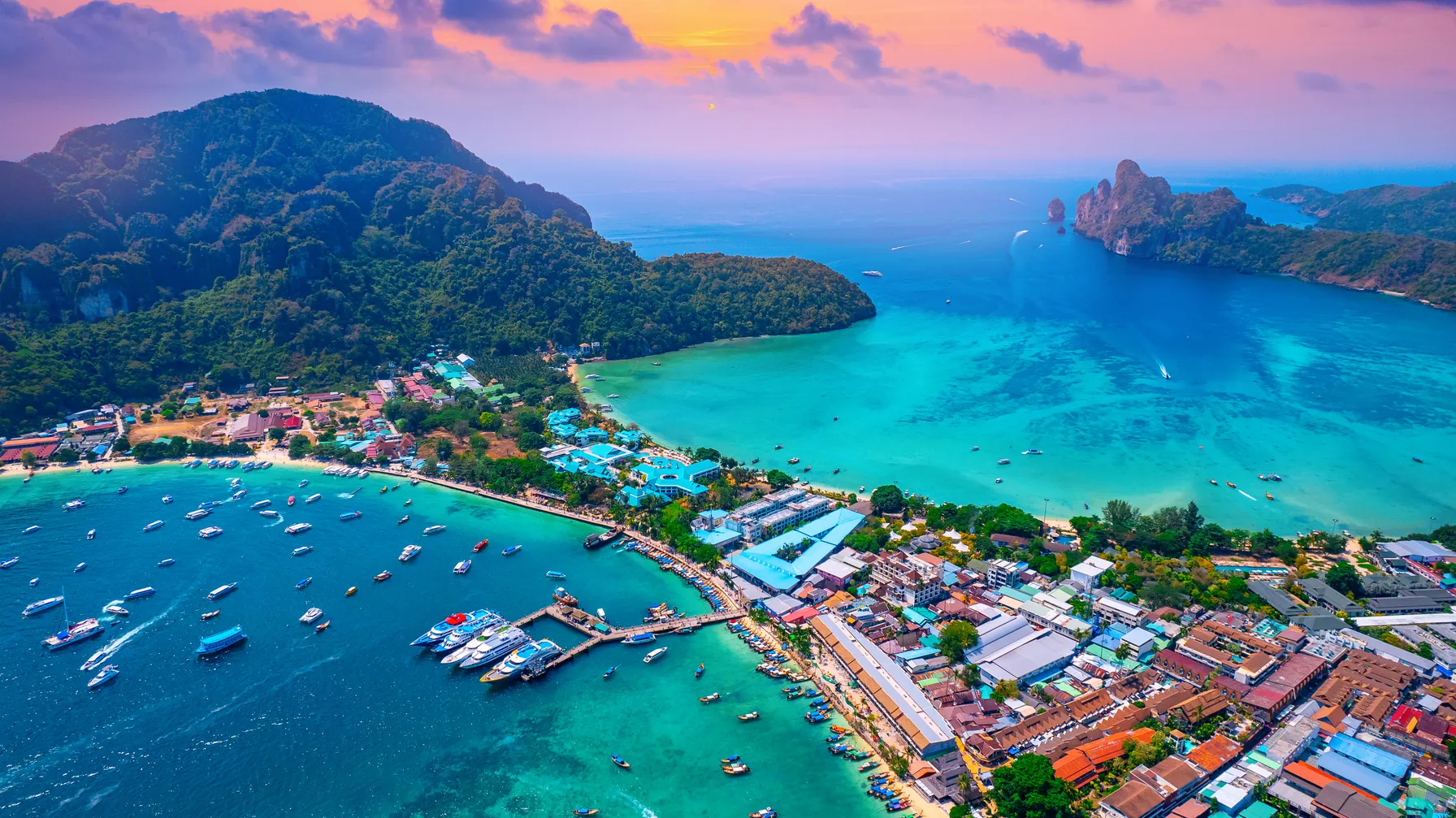
The Koh Phi Phi archipelago seduces with its double personality: sites accessible to beginners around the main islands and more technical spots like Shark Point, where leopard sharks evolve among giant anemones. Further south, Koh Lanta opens access to the legendary Hin Daeng and Hin Muang, true underwater cathedrals with vertiginous walls where experienced divers can encounter manta rays and reef sharks.
Gulf of Thailand: learning and accessible exploration
The Gulf reveals a more intimate character, ideal for learning and gently discovering the Thai underwater wonders. Koh Tao stands out as the must-visit destination for learning to dive, concentrating the highest density of quality dive centers. The island offers a natural progression from shallow sites to more technical dives.
Sail Rock, accessible from Koh Tao, is one of the most spectacular sites in the Gulf with its exceptional coral formations and frequent encounters with whale sharks. The protected environment and generally calm conditions make it an ideal learning ground while offering thrilling emotions.
Koh Samui complements the offer with remarkable snorkeling sites and a few diving spots suitable for intermediate levels. The proximity of the three main islands allows for easily planned combined excursions according to your level and desires.
What exceptional marine life to observe under water?
The richness of Thai marine life is a major asset that places this country among the world's most coveted underwater diving destinations. This exceptional biodiversity thrives in tropical waters with constant temperatures around 28°C.
Mythical encounters with marine giants
Whale sharks represent the Holy Grail for any diver visiting Thailand. These peaceful giants, which can reach 12 meters in length, regularly frequent Thai waters, particularly between March and June, and then from September to October. Richelieu Rock and the surroundings of Koh Tao offer the best chances of encountering these majestic creatures that feed on plankton at the surface.
Manta rays also choreograph unforgettable underwater ballets, especially around the cleaning stations of the Similan Islands and Koh Bon. These graceful creatures, with wingspans that can exceed 5 meters, move with hypnotizing elegance, offering divers moments of pure underwater magic.
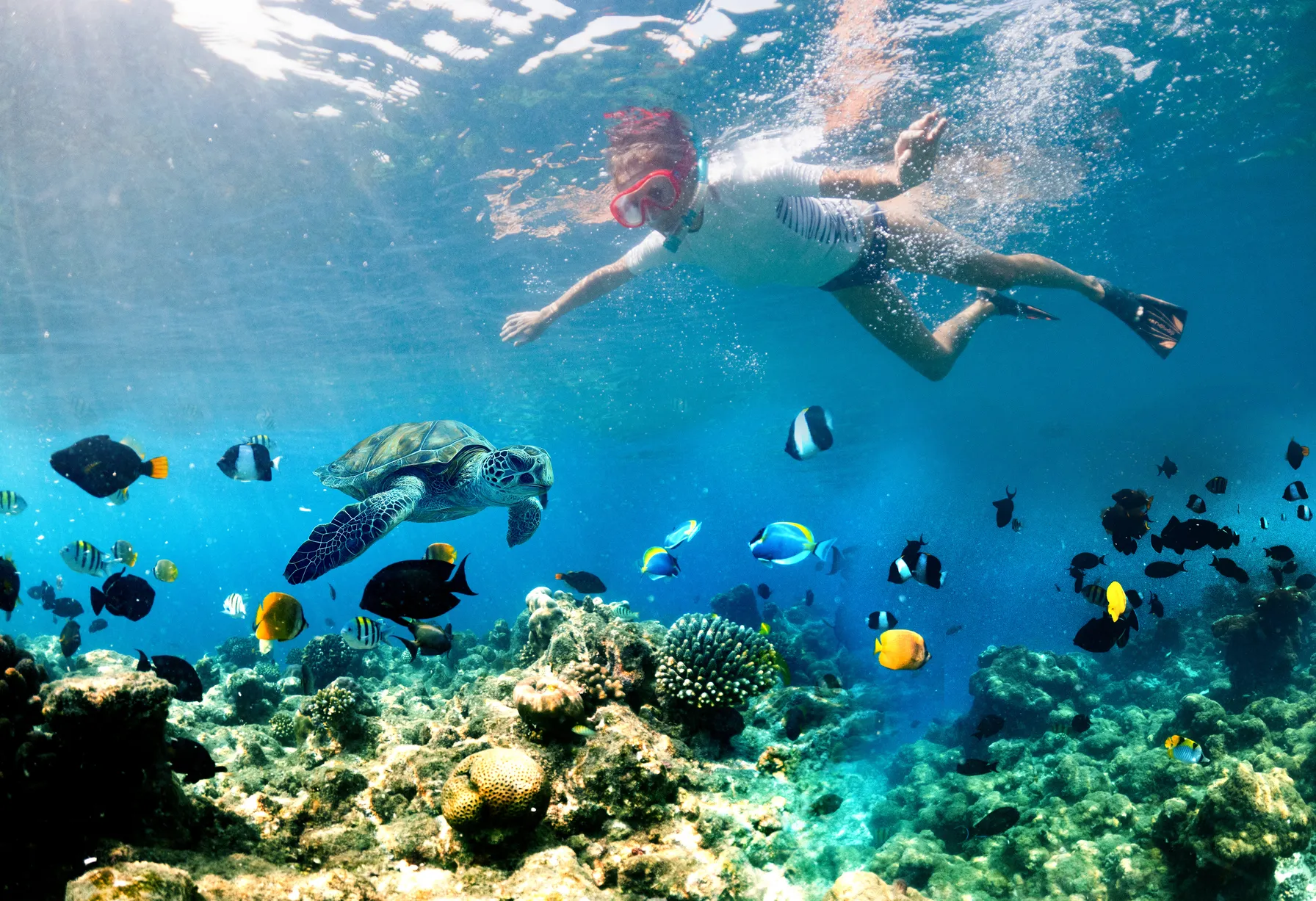
Observing sea turtles is an integral part of the Thai experience. Green turtles and hawksbill turtles regularly frequent seagrass beds and coral reefs, particularly visible around Koh Phi Phi and in the Similan Islands National Park.
Colorful biodiversity of tropical reefs
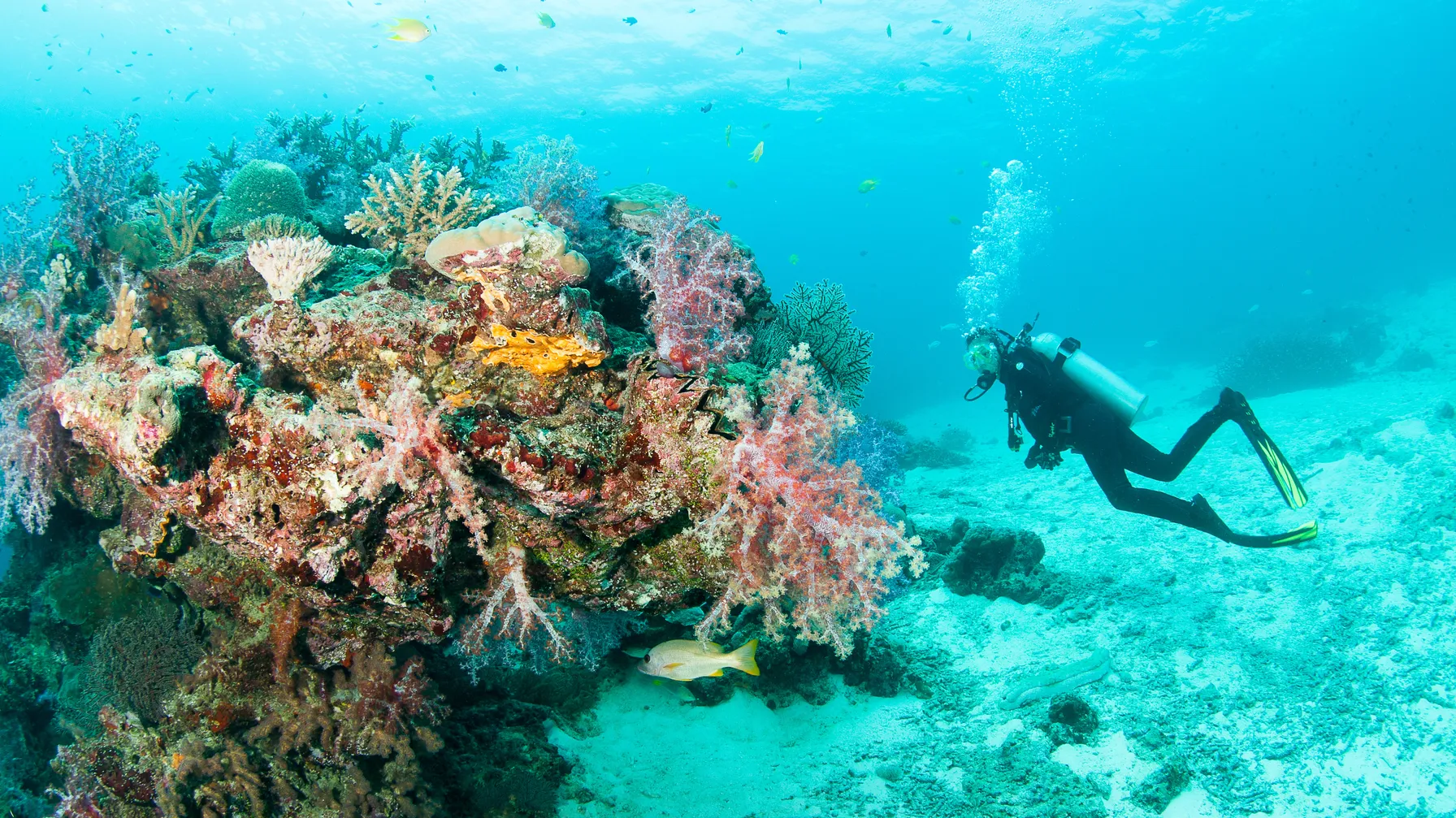
Beyond spectacular encounters, Thai reefs teem with an extraordinary diversity of marine life. Tropical fish compose permanent colorful tableaux: schools of yellow fusiliers, silver batfish, complex-patterned angelfish, and clownfish evolving in their protective anemones.
Macro photography finds here a privileged field of expression with a remarkable cryptic fauna. Pygmy seahorses, perfectly camouflaged frogfish, vibrantly colored nudibranchs, and cleaner shrimps discreetly populate the reefs. This richness in small species makes each dive a visual treasure hunt for attentive observers.
The coral formations themselves constitute a permanent spectacle. Soft corals in bright colors, giant sea fans, and hard corals forming structured underwater gardens create natural decors of striking beauty, particularly preserved in marine national parks.
Book your diving trip in Thailand now to experience these exceptional encounters in Southeast Asia's most fish-rich waters.
Frequently asked questions
What certification level is required to dive in Thailand?
The PADI Open Water certification is enough to access most Thai sites. However, some spots like Richelieu Rock or Hin Daeng require an Advanced Open Water level due to currents and depth. Many centers offer training on-site, with Koh Tao being particularly renowned for its quality courses.
How much does a dive cost in Thailand?
Prices vary according to destinations and the distance of the sites. Count between 1,500 and 3,000 bahts for a single dive, and up to 6,000 bahts for excursions to the most remote sites like Hin Daeng. Multi-dive packages generally offer better rates, especially in Koh Tao where competition between centers keeps prices attractive.
Can you see whale sharks all year round in Thailand?
Whale shark sightings follow seasonal patterns. The best times are from March to June and then from September to October, particularly around Richelieu Rock and Koh Tao. However, these encounters remain random and depend on oceanographic conditions and the presence of plankton.
What is the underwater visibility in Thailand?
Visibility varies with the seasons and areas. In the Andaman Sea during the dry season, it can reach 30 meters at remote sites like the Similan Islands. In the Gulf of Thailand, count on about 10 to 20 meters. Weather conditions and currents significantly influence water clarity.