Why choose an Azores cruise?
\n
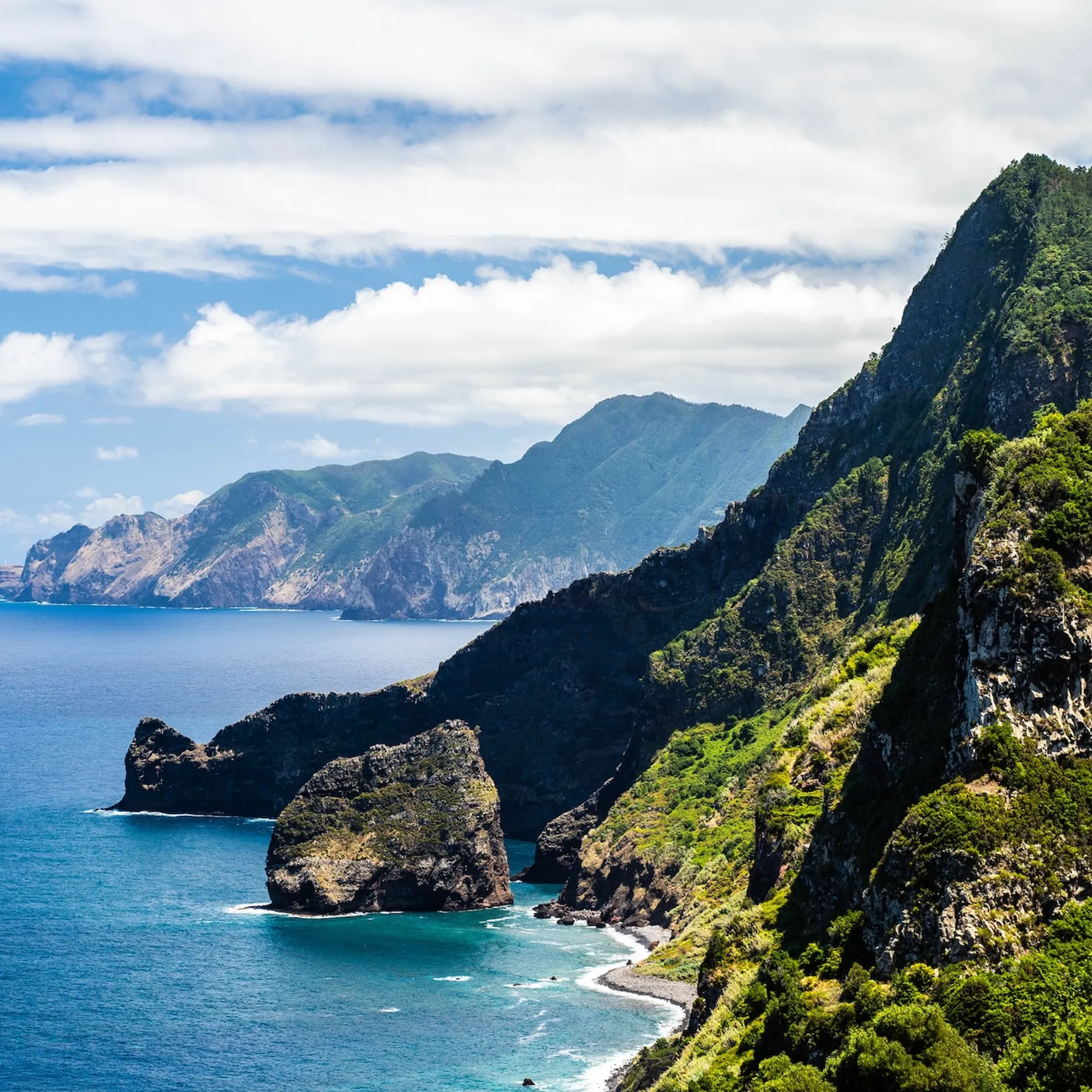
Located more than 1,500 kilometres from the Portuguese coast, the Azores archipelago forms a world apart, suspended between sky and sea. Nine volcanic-origin islands rise from the Atlantic Ocean, each with its own character, unique landscapes and well established traditions. Choosing an Azores cruise means opting for a way of travelling that allows you to go from one island to another without logistical constraints, enjoying the seascape from the open sea before each stop.
\n
What sets this archipelago apart from other Atlantic destinations is primarily the diversity of what it offers. The lush vegetation covers the slopes of calderas, the crater lakes reflect shades of green and blue depending on the light, and natural hot springs invite a spontaneous pause in the heart of nature. The Azores are also one of the few places in the world where it is possible to observe whales in freedom, in their natural environment, just a few miles from the coast.
\n
For hiking, diving, gastronomy, or simply getting away, the archipelago caters to all your desires. And unlike other very popular European destinations, the Azores retain an authentic and preserved atmosphere, far from mass tourism. A cruise to the Azores thus allows combining several experiences in a single trip, tailoring each stop to your interests.
\n\n
\n\n
Which islands to discover during an Azores cruise?
\n
The archipelago comprises nine islands distributed into three geographic groups, each offering very different vibes and terrains. Here's an overview of the must-see stops to consider during your Azores cruise.
\n\n
São Miguel and Ponta Delgada, the heart of the archipelago
\n
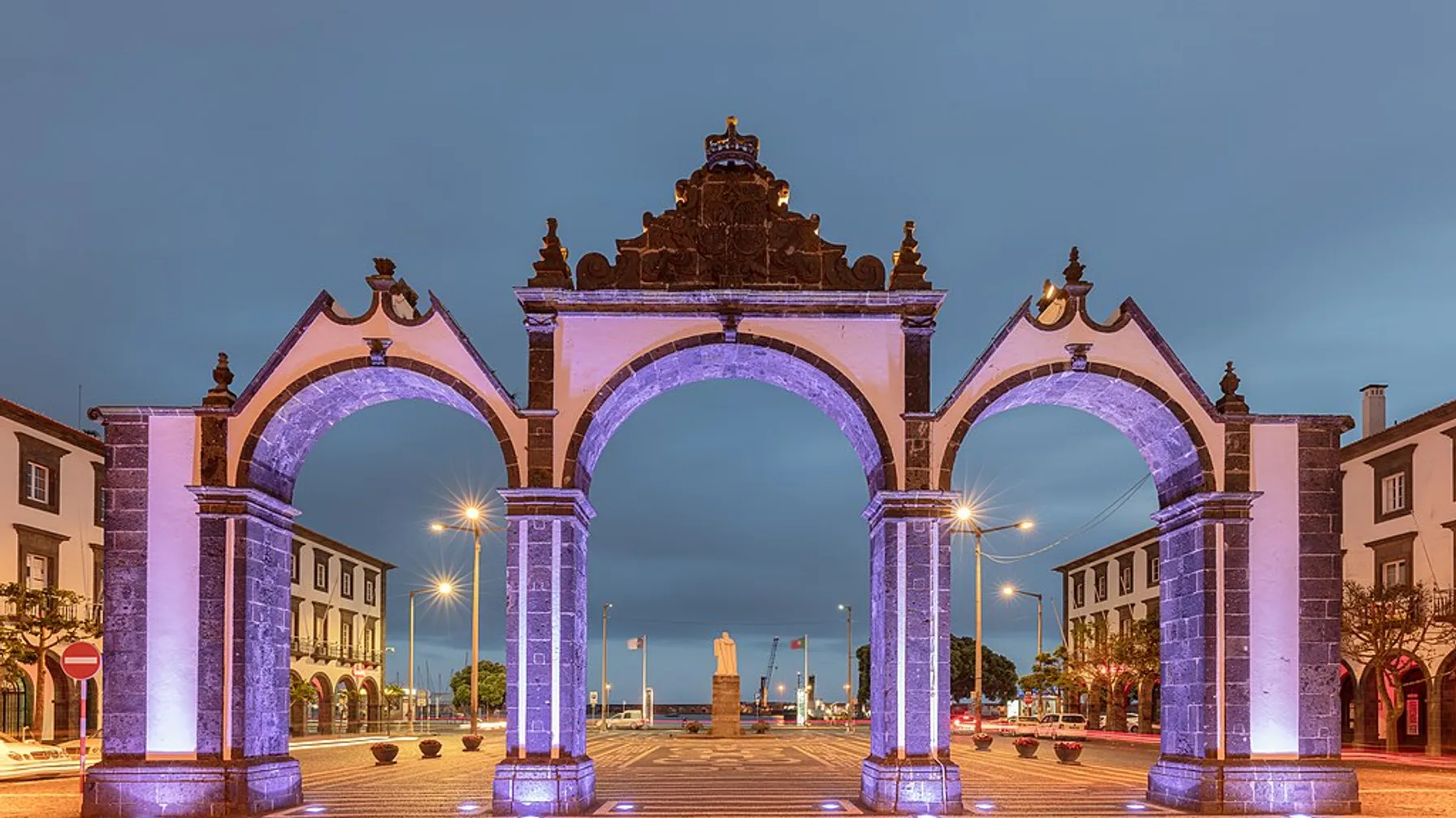
São Miguel is the largest island of the archipelago and often the first port of call for an Azores cruise. Its capital, Ponta Delgada, welcomes visitors with its basalt black facades and white limestone, cobbled squares with geometric motifs and a human-scale city vibe. The Fort of São Brás, dating from the 14th century, watches over the port for centuries and deserves a visit on arrival.
\n
inland, São Miguel reveals its natural wonders. The Sete Cidades valley hosts two lakes of different colors nestled in a caldera, a breathtaking spectacle viewed from viewpoints overlooking the valley. Further east, the Furnas valley hosts around twenty geothermal hot springs, where it is possible to taste the famous cozido das Furnas, a traditional dish cooked directly in the heat of the volcanic ground. São Miguel is also the island that houses the only two tea plantations in Europe, a detail that testifies to the uniqueness of this archipelago.
\n\n
Little Pico and Faial, between volcanoes and traditions
\n
To the west of the archipelago, Pico Island stands out with its imposing silhouette. Mount Pico, the highest peak in Portugal at 2,351 metres, dominates the horizon and attracts hikers who wish to reach its summit for an unbeatable view of the neighboring islands. The island's vineyards, classified as a UNESCO World Heritage site, span lava-black terraces down to the ocean, creating an agricultural landscape of great originality.
\n
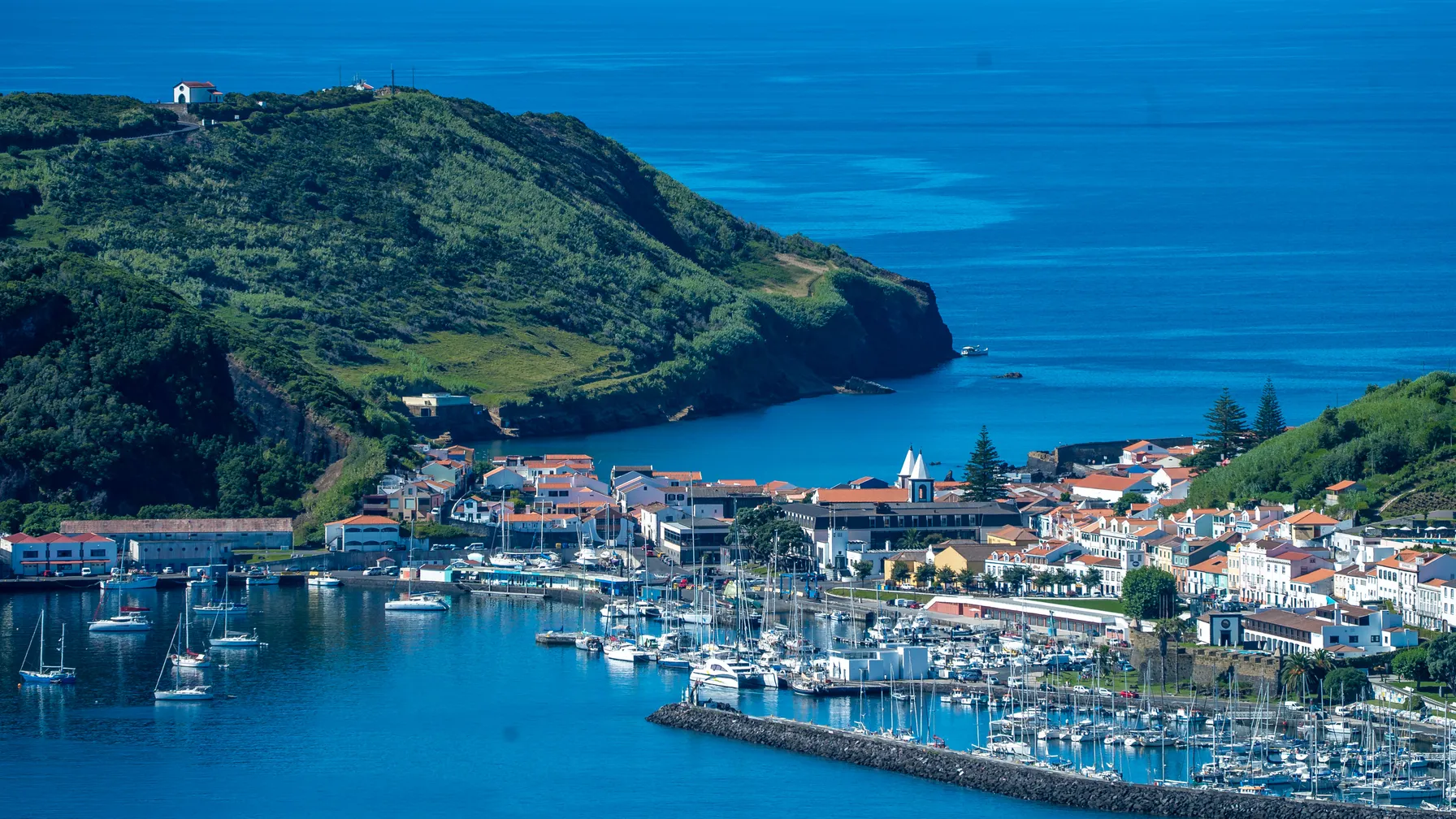
Right opposite, separated by a sea channel of about twenty kilometers, Faial Island offers a striking contrast with its rugged cliffs and the Horta marina, famous worldwide for its murals painted by passing sailors. The Capelinhos volcano, whose last eruption dates back to 1957-1958, is one of the archipelago's most impressive geological sites, with its frozen lava flows still advancing into the sea.
\n\n
\n\n
What is the best time for an Azores cruise?
\n
One of the archipelago's major strengths is that an Azores cruise is feasible all year round. The temperate oceanic climate keeps pleasant temperatures in all seasons, even if each period has its own advantages.
\n
Here's a concise table to help you choose the best moment according to your desires:
\n\n
\n \n \n | Period | \n Average temperatures | \n Highlights | \n
\n \n \n \n | April to June | \n 17 to 22°C | \n Hydrangea bloom, start of whale season | \n
\n \n | July to September | \n 22 to 26°C | \n Calm sea, ideal for land excursions and diving | \n
\n \n | October to November | \n 18 to 22°C | \n Fewer crowds, autumn light, pleasant hikes | \n
\n \n | December to March | \n 14 to 17°C | \n Whale watching (sperm whales), wild atmosphere | \n
\n \n
\n\n
The whale-watching season mainly runs from March to October, with peaks in April and May for blue whales and common rorquals. Sperm whales, meanwhile, are present practically year-round in the waters surrounding the archipelago, making it a top destination for cetacean enthusiasts. Shore excursions are practicable in all seasons, even if spring and summer offer the best conditions for hiking and water activities.
\n\n
\n\n
How to organize your Azores cruise with Vialala?
\n
A cruise to the Azores is not just about boarding a ship and following a fixed itinerary. At Vialala, we believe that every traveler deserves a program that looks like them, built around their desires, pace and priorities. That's why our Travel Planners, experts in Atlantic destinations, guide you in designing a fully personalized stay.
\n
Would you like to combine an Azores cruise with a few days of immersion on São Miguel before or after your embarkation? Do you prefer land excursions focused on hiking rather than culture? Or include a sea outing dedicated to whale watching in your program? Our Travel Planners take care of every detail to build a coherent and memorable itinerary.
\n
Here's what Vialala can arrange for you:
\n\n
\n - The selection of the best stops according to your interests;
\n - The coordination of land excursions on each island;
\n - Your accommodation before or after your Azores cruise;
\n - Transfers and optional activities such as diving, kayaking or whale watching;
\n - A personalized A to Z support by a dedicated expert.
\n
\n\n
Traveling to the Azores is already stepping off the beaten track. Doing it tailor-made with Vialala ensures that every moment of your trip exactly matches what you envisioned.