What to do in Hanoi: complete guide to the must-sees of the Vietnamese capital
What are the must-see historical gems of the capital?
Visiting Hanoi is above all immersing yourself in an exceptional heritage where each stone tells the millennia-old history of Vietnam. The capital offers a remarkable concentration of iconic sites that are the foundation of your discovery.
The old quarter and the soul of the old town
The beating heart of Hanoi is revealed in its legendary old quarter, a true labyrinth of alleys where the authenticity of Vietnam resonates. This unique urban complex, organized around the famous 36 guilds, immerses you in a world where each artery bears the name of an ancestral trade. Hang Bac for silversmithing, Hang Ma for votive objects, or Hang Quat for fans: each street tells a specialty craft passed down through generations.
Your exploration of this historic area will lead you through characteristic tube houses, witnesses to traditional Vietnamese architecture. These narrow and deep buildings, adapted to the fiscal constraints of the time, today house craft shops, typical cafes, and family workshops. The unique atmosphere of this district is particularly revealed in the early morning, as locals go about their daily activities in a symphony of scooters and lively conversations.
Walking through these cobbled alleyways will provide unexpected discoveries: temples hidden in courtyards, preserved colonial facades, and shops where traditional craftsmanship continues. Plan at least half a day to delight in this immersion into Hanoian lifestyle.
Hoan Kiem Lake and its legendary temple
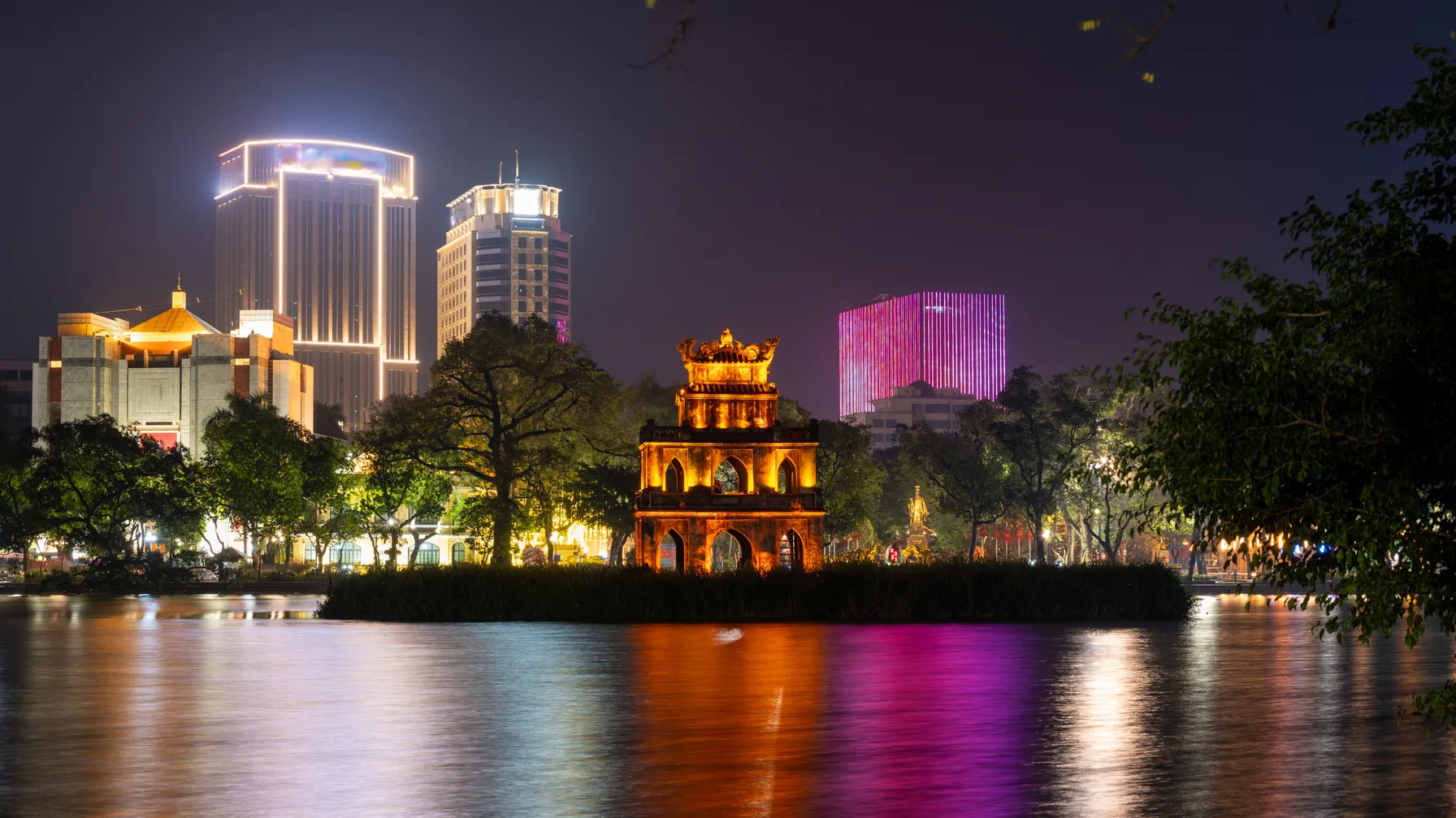
At the heart of the Vietnamese capital lies Hoan Kiem Lake, a true green lung that has paced the life of its inhabitants for centuries. This serene body of water, whose name means "lake of the returned sword", has its origins in a foundational legend that tells how Emperor Ly Loi returned a magical sword to a golden turtle.
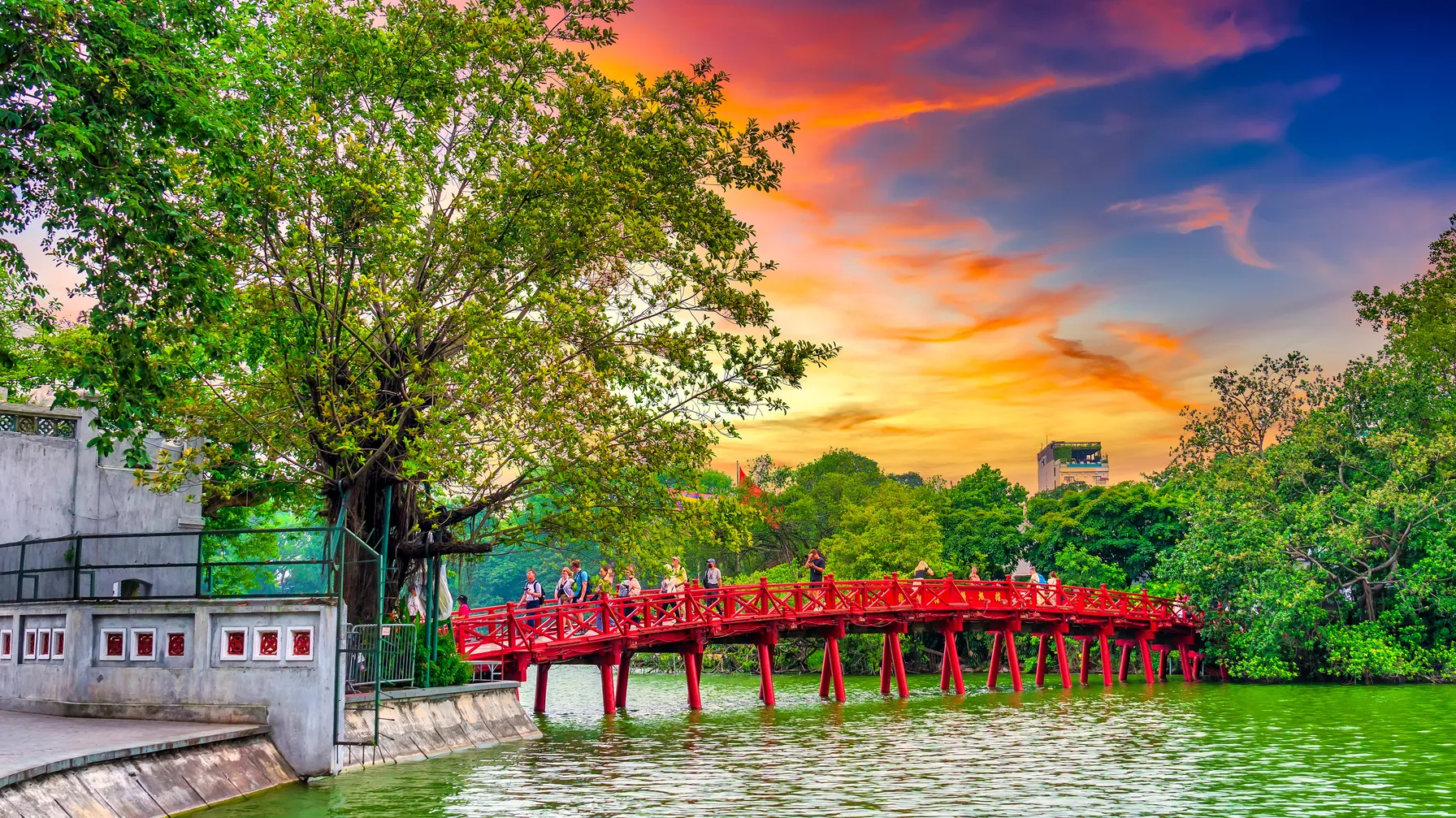
The Ngoc Son Temple, accessible via a picturesque vermillion bridge, majestically sits on a small island to the north of the lake. This 18th century pagoda, dedicated to scholars and national heroes, serves as a sanctuary of serenity where the faithful come to meditate and honor their ancestors. The delicate architecture of the building, with its curved roofs and refined sculptures, perfectly illustrates traditional Vietnamese decorative art.
A complete tour around Hoan Kiem Lake reveals various facets of the capital: on the east side, lively café terraces; on the west, French colonial elegance; on the north, the commercial bustle of the old quarter. Early in the morning, you'll witness the fascinating spectacle of group tai-chi sessions, where hundreds of residents practice this martial art in harmony with urban nature.
The Temple of Literature, cradle of Vietnamese scholarship
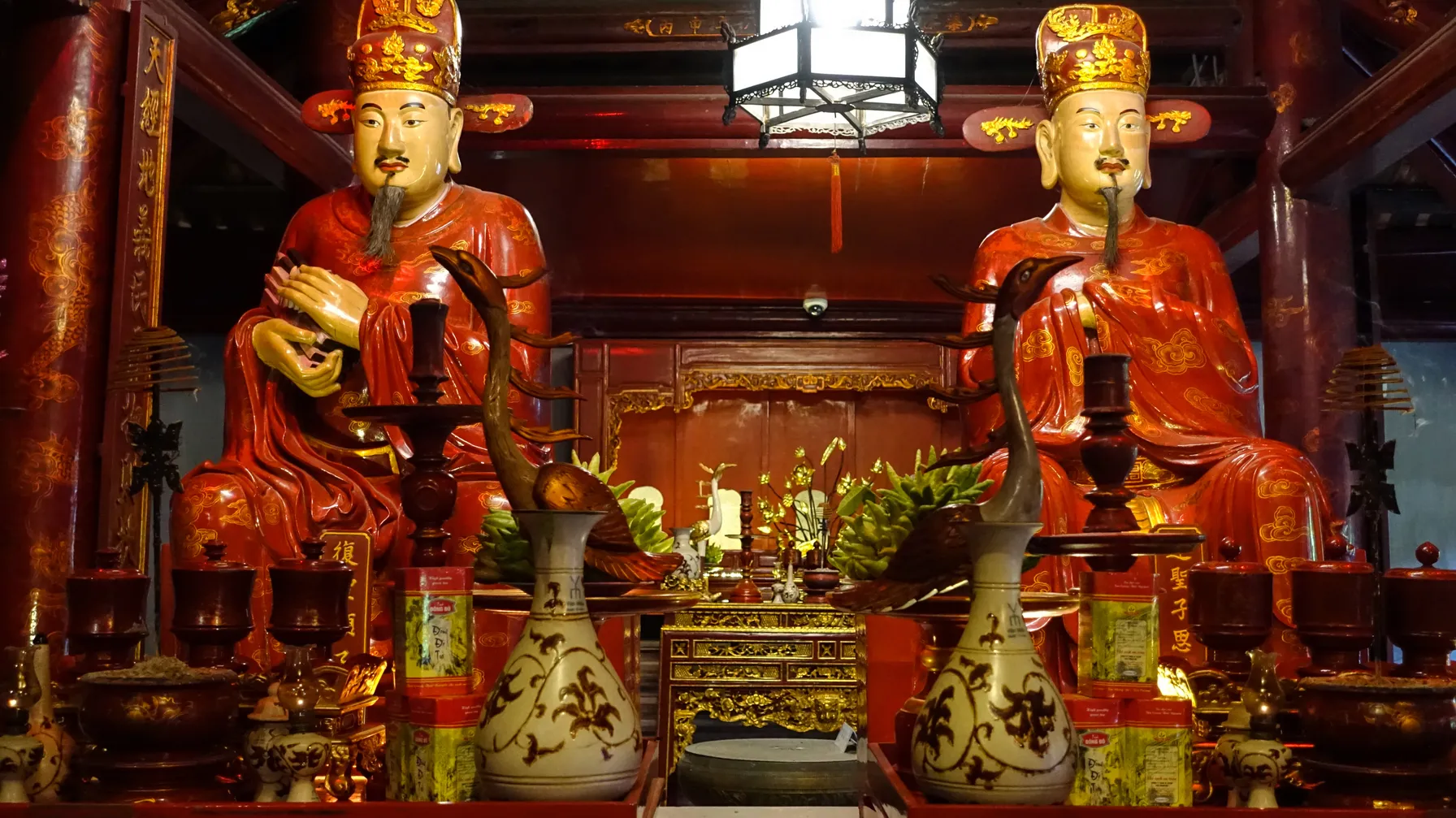
Constructed in 1070 under the Ly Dynasty, the Temple of Literature embodies Vietnam's intellectual heritage as the country's first university. This exceptional architectural complex, dedicated to Confucius and Vietnam’s great scholars, unfolds its peaceful gardens and centuries-old pavilions within a preserved verdant sanctuary.
Visiting this emblematic site leads you through five successive courtyards, each revealing a particular dimension of Confucian culture. The doctoral steles, engraved with the names of mandarin exam laureates, highlight the importance placed on education in traditional Vietnamese society. These stone monuments, listed as a World Heritage by UNESCO, are a unique testimony to academic excellence through the centuries.
The refined architecture of the temple, with its glazed tile roofs and dragon sculptures, exemplifies the decorative art of the dynastic period. The central courtyard, adorned with a square pond where colorful carps swim, offers a suitable setting for contemplation and understanding of the fundamental values of Vietnamese civilization.
Book your trip to Hanoi now
Demandez votre devis Hanoi sur-mesure 100% gratuit
 4.8
4.8+3.000 travelers satisfied
How to immerse yourself in the authentic culture of Hanoi?
The authenticity of the Vietnamese capital is revealed through immersive experiences that intimately connect you with its tumultuous history and the daily life of its inhabitants. These privileged encounters are the very essence of your stay.
The Hoa Lo Prison, a witness to the tumultuous history
The Hoa Lo Prison, ironically nicknamed "Hanoi Hilton" by the American pilots who were detained there, stands as a poignant testimony to Vietnam's history. Built by the French colonial administration in 1896, this penal fortress successively housed Vietnamese revolutionaries fighting colonization, and later, American POWs during the Indochina conflict.
Your visit to this historical museum plunges you into the detention conditions of the colonial era, revealing the repressive methods used against the Vietnamese independence fighters. The faithful reconstructions of the cells, the displayed torture instruments, and the archival photographs testify to the brutality of the colonial penal system. This immersion into history helps understand the deep roots of Vietnamese resistance and the emergence of iconic national independence figures.
The section dedicated to the Vietnam War presents a Vietnamese perspective on this major 20th-century conflict. The detention conditions of American aviators are shown from the official Vietnamese standpoint, providing a different light on this troubled period. Count approximately two hours for a thorough and comprehensive visit to this memorial site.
Train Street and Hanoi's daily life
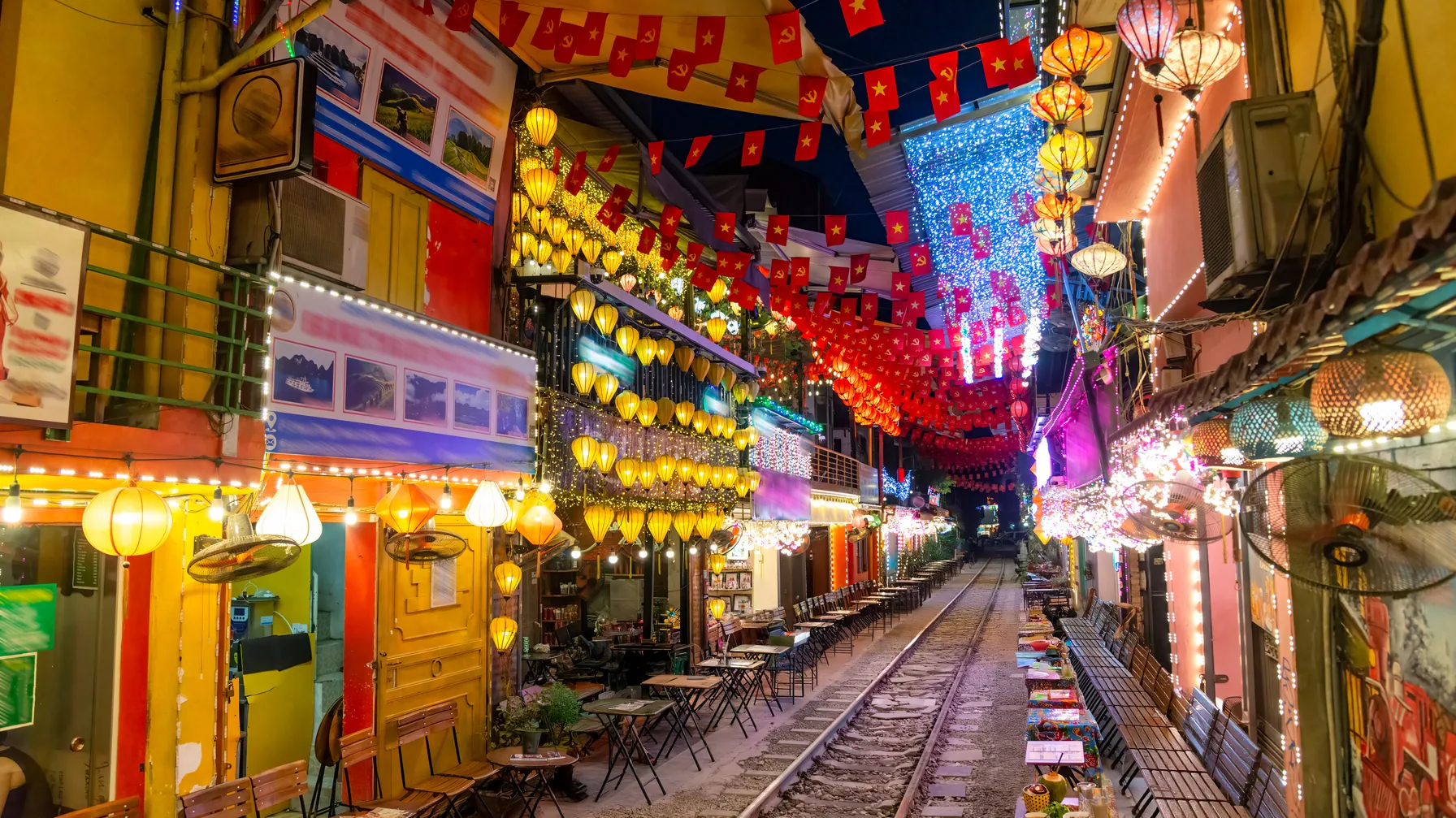
The experience of Train Street reveals a fascinating aspect of Hanoi's urban adaptation, where modern railway coexists harmoniously with traditional housing. This stretch of railway, cutting through a densely populated residential area, provides a striking spectacle of proximity between transportation infrastructure and domestic life.
Twice a day, the freight train slowly crosses this urban corridor a few meters wide, brushing past the facades of houses and forcing the residents to temporarily fold their stalls and personal belongings. This daily choreography, perfectly mastered by the residents, illustrates the Vietnamese art of space optimization and peaceful coexistence with urban constraints.
The cafés set up along the rails offer a unique experience: savoring a traditional Vietnamese coffee while waiting for the train to pass, in an atmosphere of extraordinary proximity to the railway mechanics. This unusual attraction, emblematic of Vietnamese urban creativity, is worth visiting for about an hour, preferably in the late afternoon to enjoy the neighborhood's liveliness.
Architectural and spiritual heritage
The architectural diversity of Hanoi reflects the multiple influences that have shaped the identity of the Vietnamese capital. St. Joseph's Cathedral, an exact replica of Notre-Dame de Paris, stands with its neo-Gothic towers at the heart of the historic district, symbolizing the French imprint on colonial urbanism. This 1886 building, with its colorful stained glass and slender arches, is a major architectural landmark and a place of active worship for the local Catholic community.
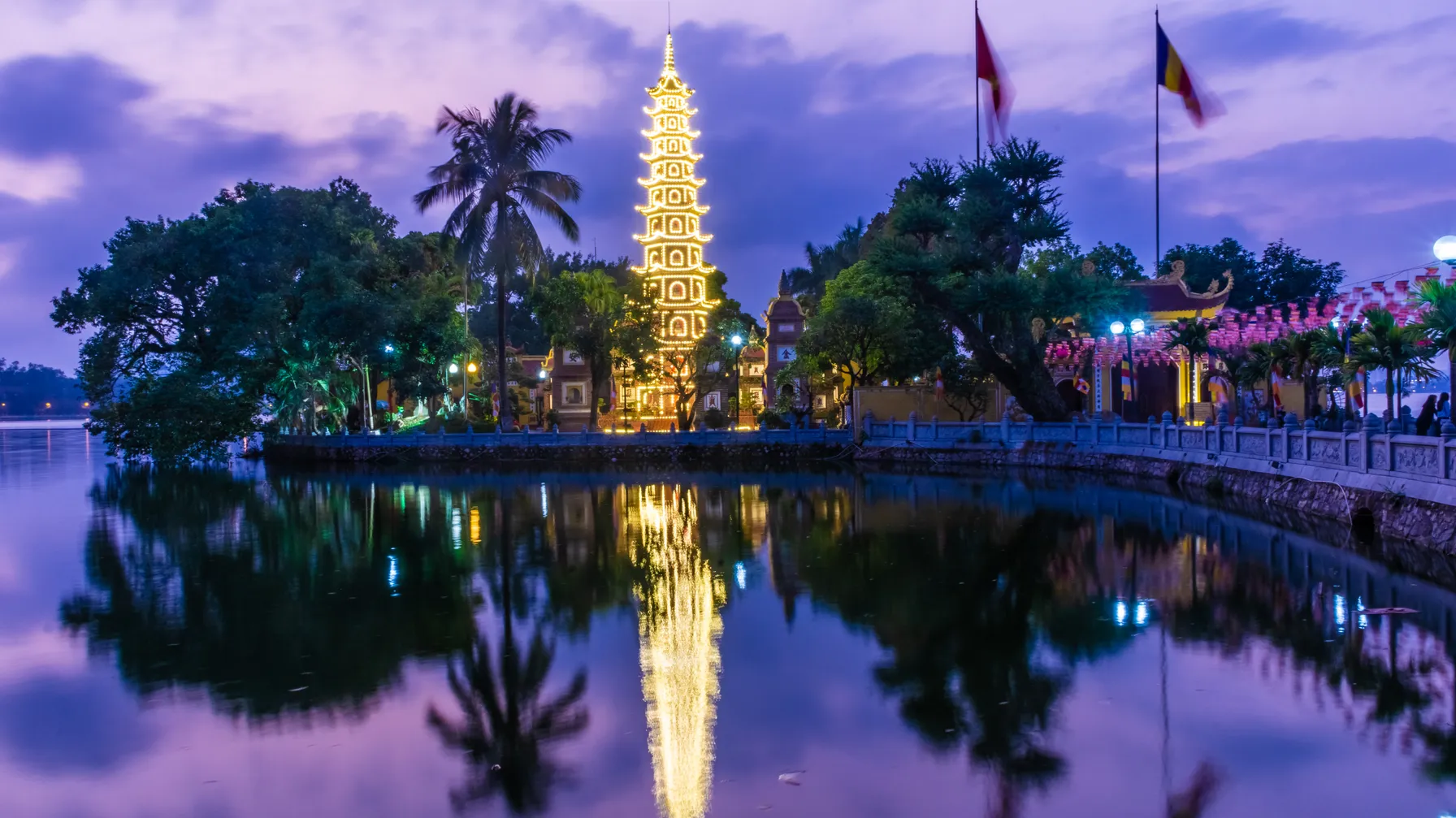
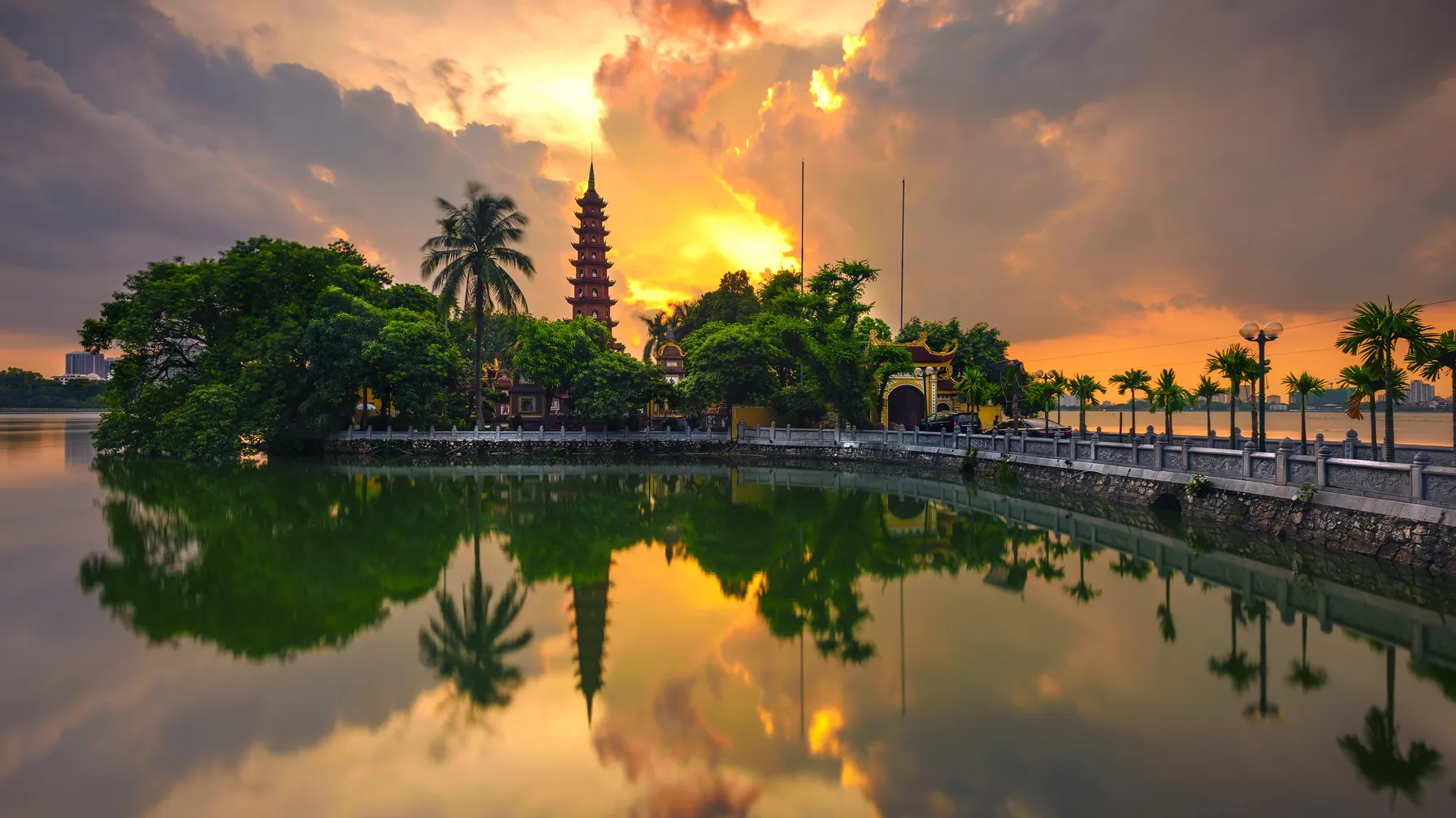
The Tran Quoc Pagoda, established in the 6th century on the edge of the West Lake, embodies the millennium-old Buddhist spirituality of Vietnam. Its eleven-story stupa, rebuilt in the 17th century, rises majestically in a setting conducive to meditation. This pagoda, considered the oldest in the capital, houses precious statues and ritual objects demonstrating the continuity of Vietnamese Buddhist tradition.
The Thang Long complex, a former imperial citadel, reveals the remnants of dynasties that have ruled Vietnam since the 11th century. Recent archaeological excavations have unearthed palatial foundations and art objects that enhance understanding of Vietnamese political and cultural history.
What sensory experiences await you in the Vietnamese capital?
The Hanoian art of living can be savored through a palette of experiences that engage all your senses, from refined gastronomy to traditional shows, local crafts, and natural getaways just outside the city.
Exceptional culinary art and street food
Gastronomy is one of the most memorable experiences of your stay in the Vietnamese capital. Hanoi's street food, internationally recognized for its diversity and quality, turns each meal into an authentic cultural discovery. The famous bun cha, a local specialty of grilled pork with rice vermicelli and fresh herbs, perfectly illustrates the balance of flavors that characterizes the cuisine of northern Vietnam.
The family-owned stalls of the old quarter continue ancient recipes passed down from mother to daughter: fragrant pho beef, crispy nem ran, delicate banh cuon, and the famous egg coffee, a unique Hanoian creation that combines robusta coffee with beaten egg cream. Each specialty reveals an aspect of the local culinary identity, influenced by the geography of the Red River and historical trade exchanges.
The Hanoian gastronomic experience is also lived in the unique atmosphere of street markets: Dong Xuan for its fresh products, Quang Ba for its morning flowers, or the night markets that animate the old quarter in the evening. This immersion in the local culinary world offers an intimate understanding of Vietnamese culture through its food traditions.
Traditional shows and local crafts
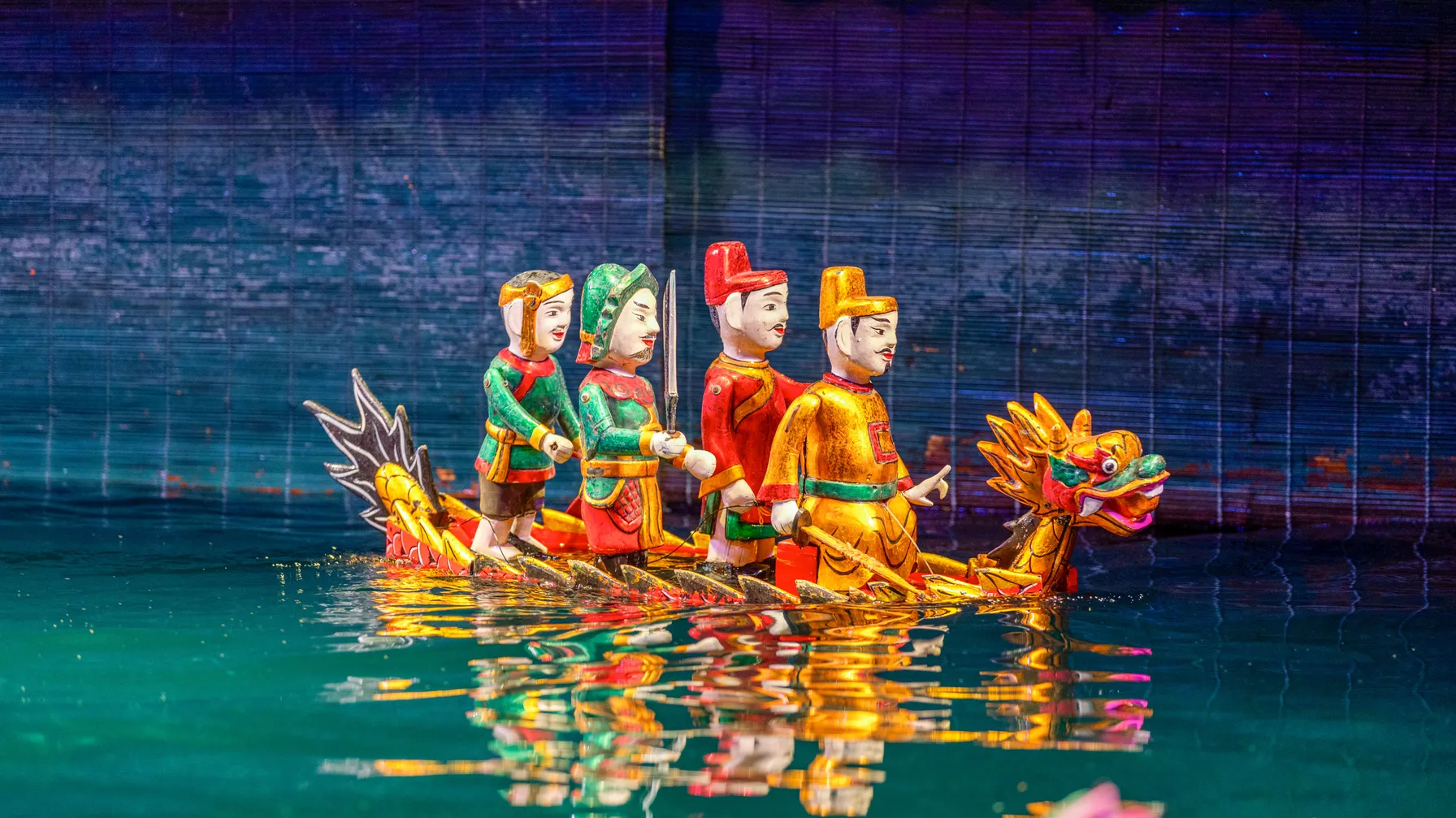
Traditional Vietnamese arts find their most refined expression in Hanoi, especially through the water puppet show that perpetuates a unique, millennia-old art form in Vietnam. This artistic form, born in the rice fields of the Red River Delta, tells popular legends and scenes of rural life through wooden figures manipulated in a pool of water. The Thang Long Theater, located near Hoan Kiem Lake, offers this exceptional cultural experience daily in an authentic setting.
Traditional Hanoi craftsmanship can be explored in the specialized villages around the capital: Bat Trang for ceramics, Van Phuc for silk, Dong Ho for folk prints. These artisanal communities, preserved for centuries, perpetuate unique know-how where you can watch master craftsmen at work and acquire authentic pieces directly from the creators.
The contemporary art galleries of the French Quarter display modern Vietnamese creation that dialogues with ancient traditions, revealing the artistic vitality of Hanoi's new generation of artists.
Getaways at the gates of the capital
Hanoi's strategic geographical position provides access to exceptional natural destinations that enrich your discovery of northern Vietnam. Halong Bay, a UNESCO World Heritage Site, is a three-hour drive away and constitutes the essential maritime excursion with its thousands of karst islets emerging from emerald waters.
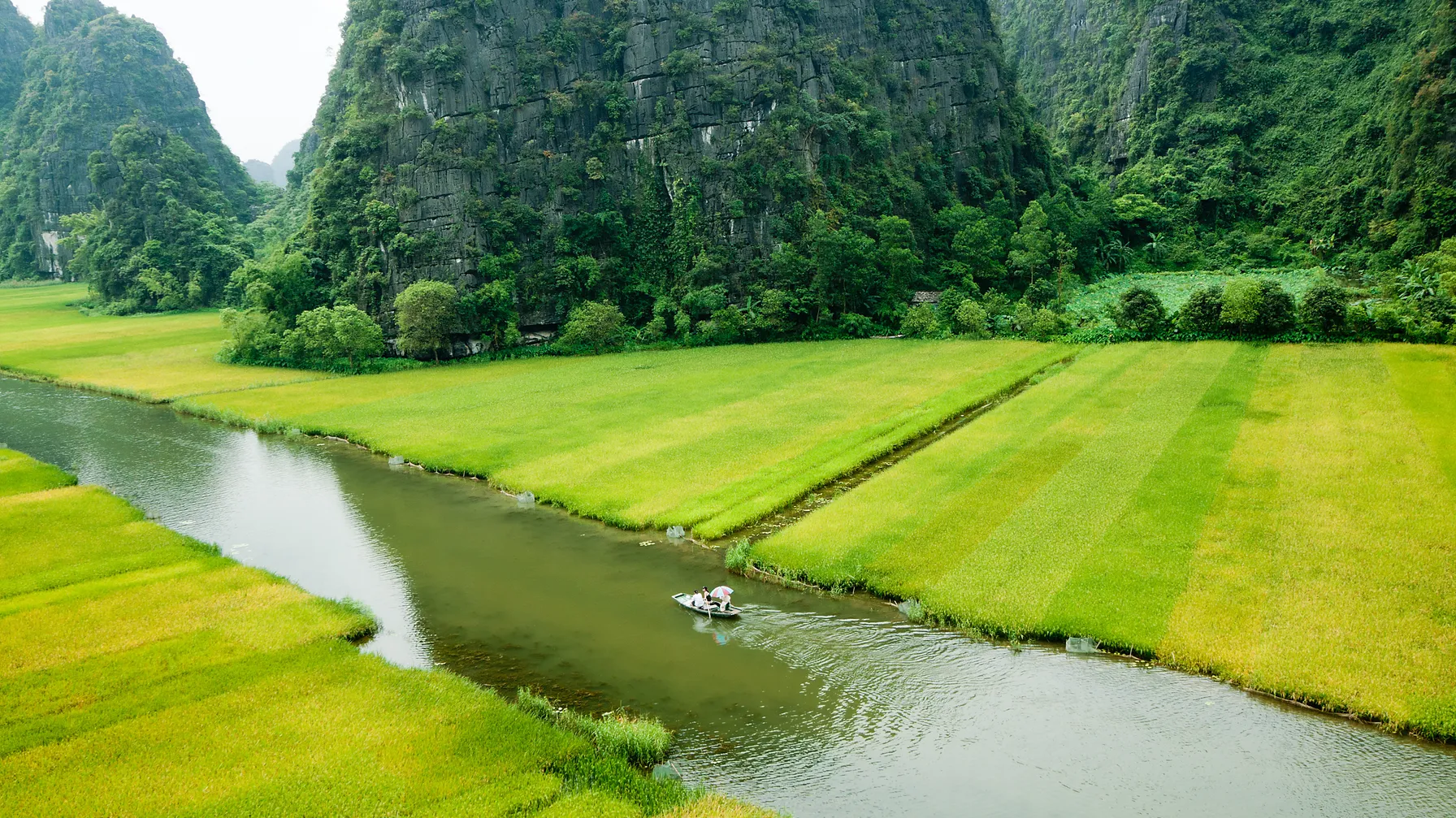
Ninh Binh, nicknamed "the terrestrial Halong Bay", offers a unique continental karst landscape where winding rivers and rocky peaks create a grandiose natural setting. This region, easily accessible on a day trip from the capital, reveals ancient temples nestled in the rocks and natural caves sculpted by millennial erosion.
The village of Duong Lam, an hour's drive from Hanoi, preserves the traditional rural architecture of the Red River Delta with its centuries-old laterite houses and communal temples. This cultural getaway offers an understanding of the traditional social organization of Vietnamese villages and meeting the inhabitants in their preserved daily environment.
Contact us for more information on the best times to visit Hanoi
Being in Hanoi equates to a continuous discovery, each district revealing a new facet of this multi-faceted capital. Between millennial heritage and assumed modernity, the city offers an exceptional travel experience that deeply marks travelers in search of authenticity and cultural refinement.