Hoi An in January: should you travel during this period?
What are the weather conditions in Hoi An in January?
The climate of Hội An in January is characterized by a transition between the rainy season and the more clement period that will follow. This region of central Vietnam then experiences particular weather conditions that deserve special attention.
Temperatures and general climate of the region
The average temperature in Hoi An in January hovers around 22°C, offering a pleasant warmth compared to the winter harshness in Europe. Minimum temperatures usually reach 21°C while maximums rarely exceed 23°C. This relative thermal stability creates a temperate environment, although the ambient humidity can intensify the sensation of heat.
Sunrise at about 6:17 AM and sunset around 5:35 PM provide approximately 11h18 of natural daylight daily. However, the effective sunlight is limited to 5 to 6 hours per day due to frequent cloud cover. This particularity gives the old town a soft atmosphere, especially photogenic for capturing the colorful facades and traditional lanterns.
Precipitation and humidity rate
Precipitation in Hoi An amounts to about 286 millimeters during January, spread over approximately 15 days. This significant rainfall, although less than November and December, maintains a high humidity level of 92%. Showers generally occur in intense but relatively short episodes, particularly in the middle of the day.
The following table details the evolution of weather conditions:
| Time | Temperature | Dominant Conditions |
|---|---|---|
| 9am | 23°C | Showers (53% of days) |
| 12pm | 23°C | Showers (50% of days) |
| 6pm | 21°C | Showers (48% of days) |
| Midnight | 21°C | Variable weather |
This weather in Hoi An significantly influences the tourist experience, making certain activities more difficult to schedule.
Contact us for more information on the best times to visit
What to discover in Hoi An despite the January climate?
Even though the weather conditions in January pose some challenges, the cultural richness of Hoi An offers many exploration opportunities. The authenticity of this destination is particularly striking during this less touristy period.
Essential cultural activities
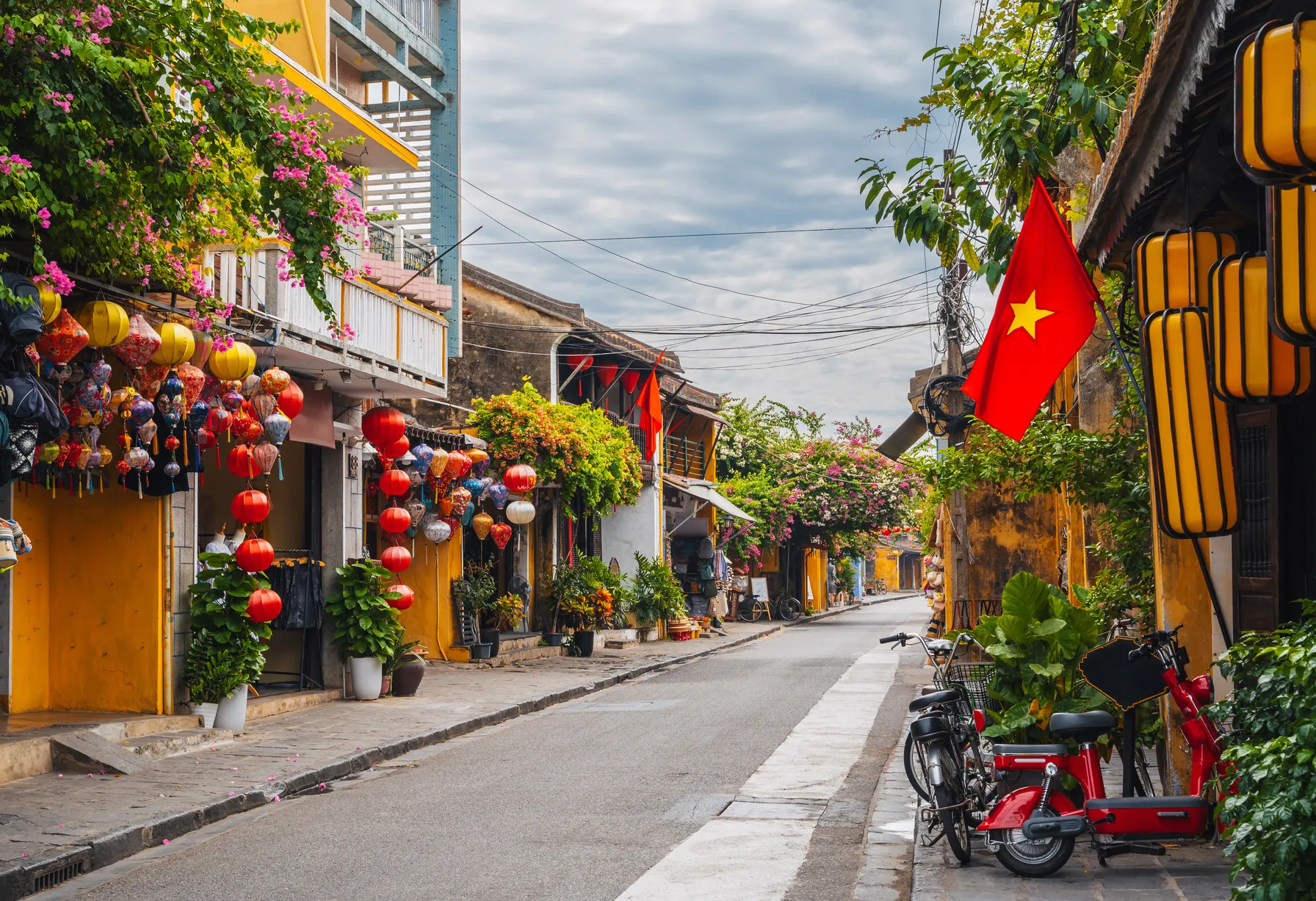
The old town is the beating heart of Hoi An, where every paved street tells a millennia-old story. The ancient houses, with their characteristic yellow facades and green shutters, create an enchanting setting even in overcast weather. The advantage of January is the reduced crowd, allowing for a calm stroll through the historical alleys without the usual bustle of more favorable months.
Museums and historical sites provide an ideal refuge during rain showers. The Tan Ky house, over two centuries old, as well as the iconic Japanese covered bridge, can be comfortably visited while sheltered from the weather. These cultural discoveries take on a special dimension when the rain drums on the ancient tiled roofs.
Handicraft workshops, especially those dedicated to making colorful lanterns, offer immersive experiences that are perfectly suited to the humid climate. These activities allow you to grasp local traditions while staying dry.
Events and festivities of the month
January often coincides with the preparations for the Lunar New Year, a fascinating period for discovering Vietnamese traditions. Although the dates vary according to the lunar calendar, this time of the year reveals a particular bustle in festive preparations. Markets are full of traditional culinary specialties and colorful decorative items.
The lantern festival, celebrated every full moon, transforms the old town into a nocturnal wonderland. In January, this event takes on a particularly magical dimension, with the golden light of the lanterns contrasting with the cool humidity of the evening. This monthly celebration remains one of the most enchanting spectacles of Hoi An, regardless of the weather.
Book your trip to Hoi An now
Is January recommended for your stay in Hoi An?
The question of whether a trip to Hoi An in January is relevant deserves a nuanced analysis, taking into account your personal expectations and the type of experience you are looking for. This period has certain advantages but also disadvantages that need to be evaluated.
For what type of traveler?
January is especially suitable for travelers who prioritize cultural authenticity over weather comfort. Photographers will appreciate the muted light and the dramatic atmospheres created by the clouds. The ambient humidity intensifies the aromas of gardens and street kitchens, providing a rich sensory experience.
Families with children might find conditions less suitable, as prolonged outdoor activities become challenging. However, couples seeking privacy will benefit from reduced tourist traffic, allowing them to enjoy intimate moments in this romantic destination.
Our advice for food lovers: January remains an excellent time to explore local cuisine. Warm specialties like cao lau or pho soup take on a particularly comforting dimension in cool, wet weather.
What are the alternatives?
If you're looking for optimal weather conditions, the best time to visit Hoi An is from February to August. February marks the start of the dry season, with a drastic reduction in rainfall (124 mm versus 286 mm in January) and more generous sunshine.
For your trip to Vietnam in January, other regions offer more clement weather. Da Nang, located just 30 kilometers away, enjoys slightly more favorable conditions. The southern part of the country, especially Ho Chi Minh City or the Mekong Delta, has an ideal climate during this period.
Pro Tip: combine several regions during your trip to Vietnam in January. Spend a few days in Hoi An for its exceptional heritage, then head to destinations with more favorable weather conditions.
Advice from our Travel Planners: if you decide to go to Vietnam in January, bring light but waterproof clothing, and plan flexible activities that allow you to adapt to changing conditions.
Did you know? The proximity of Hoi An to other remarkable destinations allows you to optimize your stay. A personalized travel guide can include My Son, a notable Cham archaeological site, or the beaches of Cua Dai, even though swimming remains chilly in January.
Contact us for more information on the best times to travel

Demandez votre devis Hội An sur-mesure 100% gratuit
 4.8
4.8+3.000 travelers satisfied