Washington Guide: what to do and when to visit the American capital?
What is the best time to visit Washington DC?
The city of Washington experiences four clearly defined seasons, each offering a different travel experience. To plan your stay under the best conditions, understanding the climatic variations throughout the year is an essential first step.
Contrasting weather across the seasons
The District of Columbia has a humid continental climate, with hot summers and cold winters. Average temperatures range from 2°C in January to 27°C in July, with peaks regularly above 32°C in the heart of summer. This heat comes with high humidity, which can make outdoor explorations particularly challenging during the months of June to August. Winter, from December to February, is cold and sometimes snowy, but it attracts travelers seeking tranquility and more affordable rates.
| Month | Average temperature (°C) | Rainy days | Sunshine |
|---|---|---|---|
| January | 2 | 10 | Low |
| April | 14 | 10 | Good |
| July | 27 | 10 | Strong |
| October | 15 | 8 | Very good |
| December | 5 | 10 | Low |
Spring and autumn, the ideal seasons
Spring, from April to May, is undoubtedly the most appreciated time to visit Washington. The famous cherry blossoms around the Tidal Basin transform the city into a rare natural spectacle, attracting visitors from around the world. The temperatures are mild, the days pleasant, and the conditions perfect for exploring the monuments on foot or by bike.
Autumn, from September to November, offers generous sunshine and lighter tourist traffic. It is an excellent moment to enjoy Washington's must-see attractions without the summer crowds. For families, couples or solo travelers, these two seasons represent the ideal period to treat yourself to a truly memorable stay. If you do still plan for summer, plan morning visit sessions and book your museum slots well in advance.
Contact us to arrange your trip to Washington at the time that best suits your preferences.
What are Washington's must-see attractions to explore?
The American capital unfolds its riches across a compact area, making it easy to plan a tailor-made itinerary. A few days are enough to grasp the essentials, provided you focus on your priorities and leave room for spontaneous discoveries.
The National Mall, between iconic monuments and exceptional museums
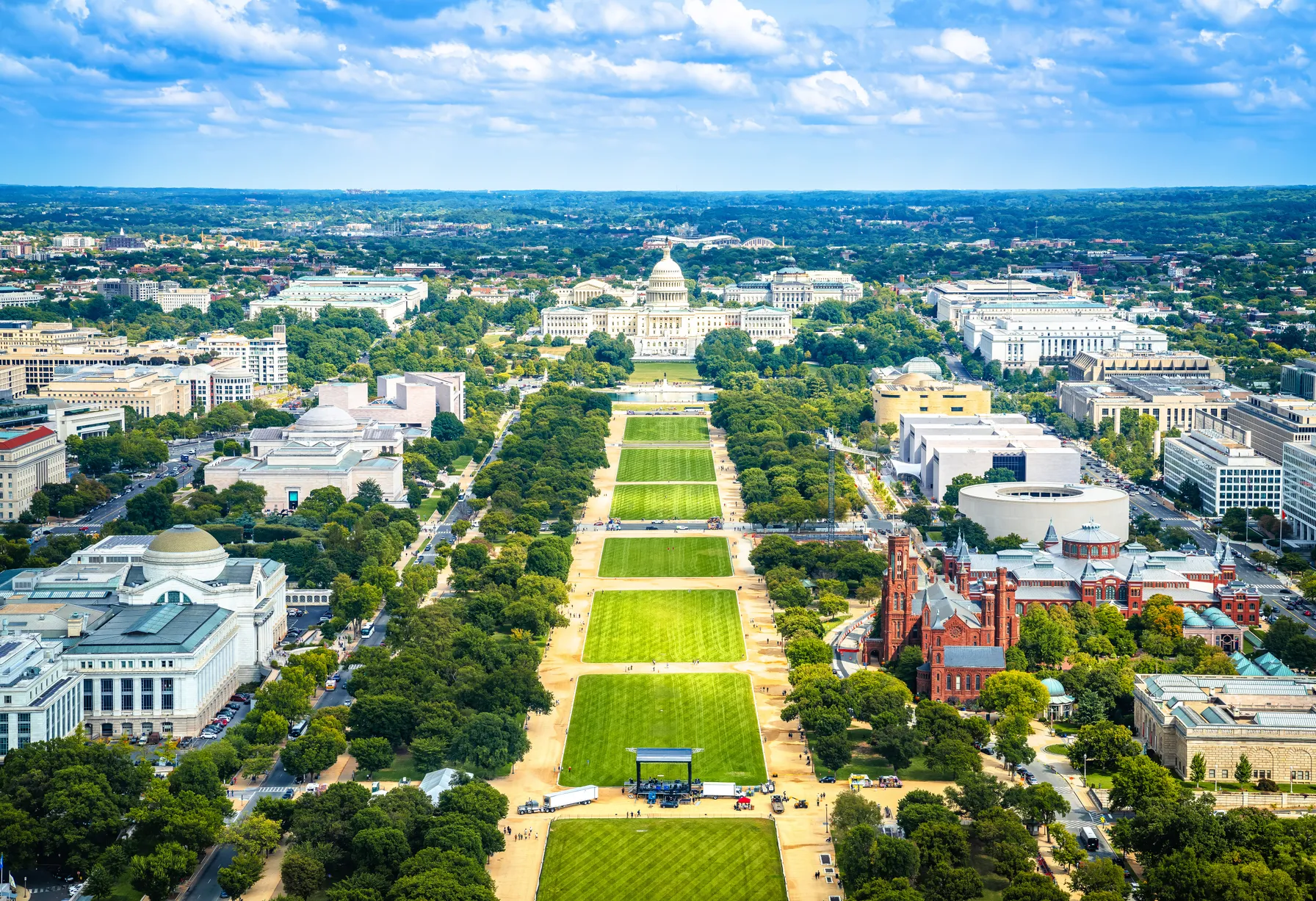
The National Mall is Washington DC's symbolic and historic heart. This verdant esplanade of nearly three kilometers links the Capitol, to the east, with the Lincoln Memorial, to the west, passing by the majestic Washington Monument. This 169-meter obelisk stands as the city's most recognizable visual landmark and, from its summit, offers an exceptional panorama of the entire Mall.
Around it, the Martin Luther King Jr. Memorial and the various monuments dedicated to veterans add a deeply moving dimension to the journey. The Smithsonian Institution museums, whose access is free, line the esplanade and alone provide a sufficient reason to extend the stay. The advice from our Travel Planners: book your slot for the National Museum of African American History and Culture several weeks in advance due to its immense popularity.
A few steps north of the Mall, the White House, the official residence of the American president for more than two centuries, also deserves special attention. Its exterior visit is accessible to all, while interior tours require strictly structured procedures, to be undertaken several months before your departure.
Capitol Hill, Georgetown and off-the-beaten-path neighborhoods
Beyond the National Mall, Capitol Hill brings together the Capitol, the seat of the U.S. Congress, the Supreme Court, and the Library of Congress in a remarkable architectural ensemble. These seats of power are an essential stop for anyone who wants to understand the political history of the United States from the inside.
For another reading of the city, Georgetown charms with its cobbled streets, colonial houses and intimate atmosphere along the Potomac. It's the ideal place to end a day of sightseeing with a dinner by the water. The Adams Morgan or Dupont Circle neighborhoods offer, for their part, a more local facet, between markets, galleries and independent eateries — a nice way to get away from the beaten path and to experience Washington as its inhabitants do.
What practical tips should you keep in mind to prepare for your stay in Washington?
Traveling to Washington DC also means taking into account its cultural calendar and anticipating a few logistical aspects to make the most of every moment.
Washington's cultural calendar and events
Washington offers a dense cultural program throughout the year. Spring is marked by the National Cherry Blossom Festival, an iconic celebration of the blooming cherry trees. In June, Capital Pride lights up the city with a festive and colorful atmosphere. Summer hosts the Smithsonian Folklife Festival on the National Mall, a must-see event to discover cultures from around the world. Depending on the season, NBA, NFL or NHL sporting events complement an already rich schedule.
The best plan for a tailor-made stay in Washington
Several details make the difference in getting the most out of your Washington DC travel guide:
- Book Capitol and White House tours several weeks, or even several months in advance;
- Obtain a SmarTrip card for public transportation, usable on the subway and buses;
- Plan for comfortable shoes, as most visits are done on foot on the National Mall.
The city is easily explored in four days, with the metro connecting Georgetown or Arlington National Cemetery. A Travel Planner can tailor a personalized itinerary for you, aligned with your profile — family, couple, or solo — and with your interests in culture, outdoor activities, or unique experiences.
Book your trip to Washington DC now and plan a stay that lives up to your expectations.

Demandez votre devis Washington D.C. sur-mesure 100% gratuit
 4.8
4.8+3.000 travelers satisfied