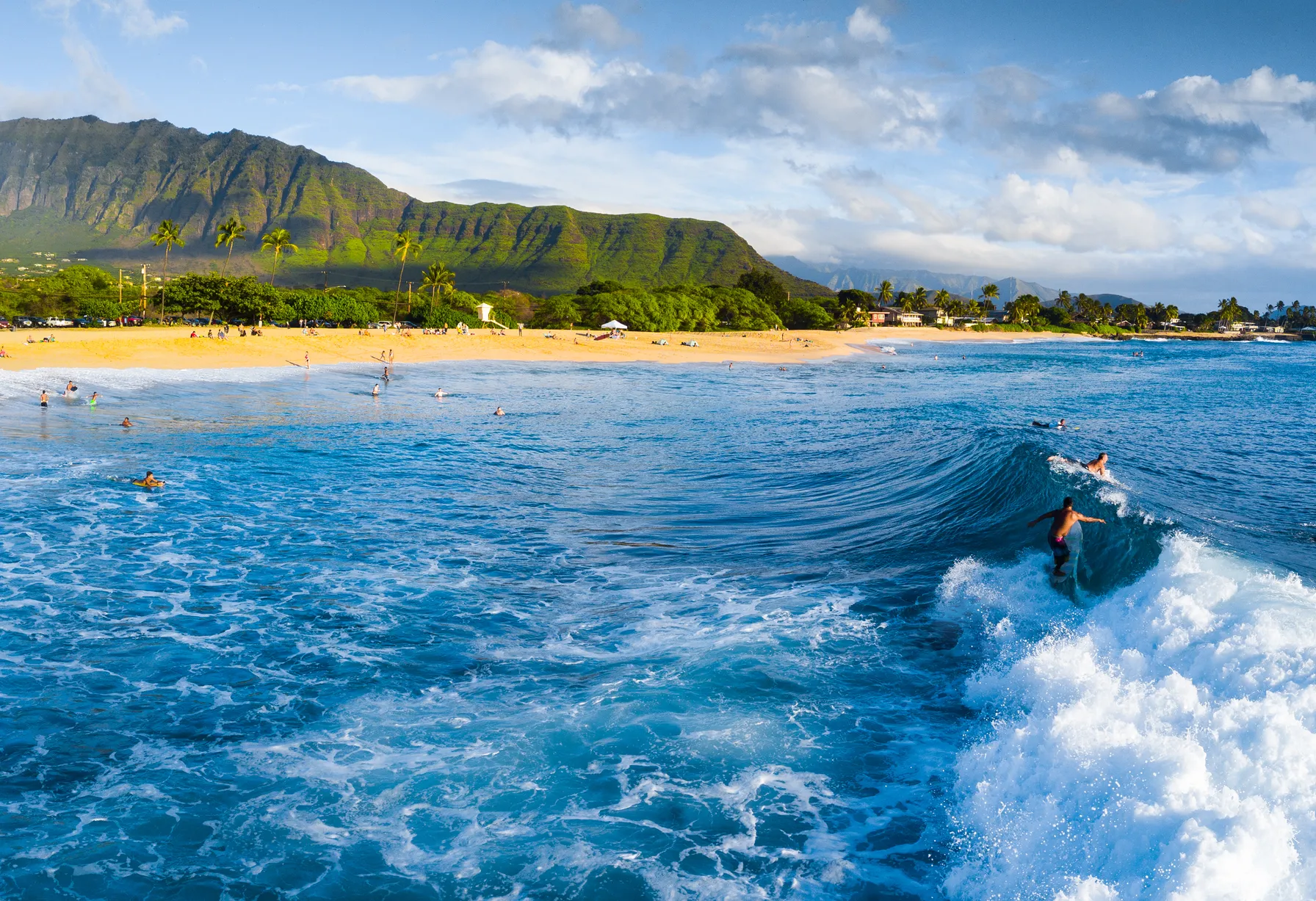
Surfing in Hawaii: the best spots for a tailor-made surfing trip.
Why is surfing in Hawaii a truly unique experience?
\n Surfing in Hawaii is immersing yourself in the very history of the sport. Born on these volcanic islands in the Pacific, surfing was once reserved for the Hawaiian nobility, who saw mastery of the waves as a sign of power and a connection with the gods of the sea. This cultural dimension still permeates today every session, every spot, and every sunset on the water.\n
\n What makes Hawaii unique is also the diversity of its offerings. Each island has its own identity in terms of surf spots, conditions and atmosphere. Whether you are a beginner, an intermediate surfer or a seasoned rider in search of extreme sensations, the archipelago adapts to your profile and your desires. It is precisely this richness that makes it a tailor-made destination par excellence.\n
What are the must-visit surf spots in Hawaii?
\n D'une île à l'autre, les contrastes sont saisissants. Certains spots sont entrés dans la légende du surf mondial, d'autres restent plus confidentiels et offrent une intimité rare. Voici une sélection des incontournables pour composer votre itinéraire.\n
The North Shore of Oahu, a temple of world surfing.
\n This is where it all begins for lovers of big waves. The North Shore of Oahu concentrates the most mythical spots in the world of surfing, and the North Shore alone deserves a full stay. Banzai Pipeline, whose perfect tubes have toured the world, is the pinnacle of this universe. Each winter, the world's best surfers converge there for breathtaking competitions, with waves that can exceed six meters. Located a few kilometres away, Waimea Bay is just as impressive: Waimea Bay is renowned for its monumental winter swells and its raw energy. These two spots are reserved for experienced surfers, but they can also be admired from the beach, for a spectacle like no other.\n
Waikiki Beach, for gliding smoothly
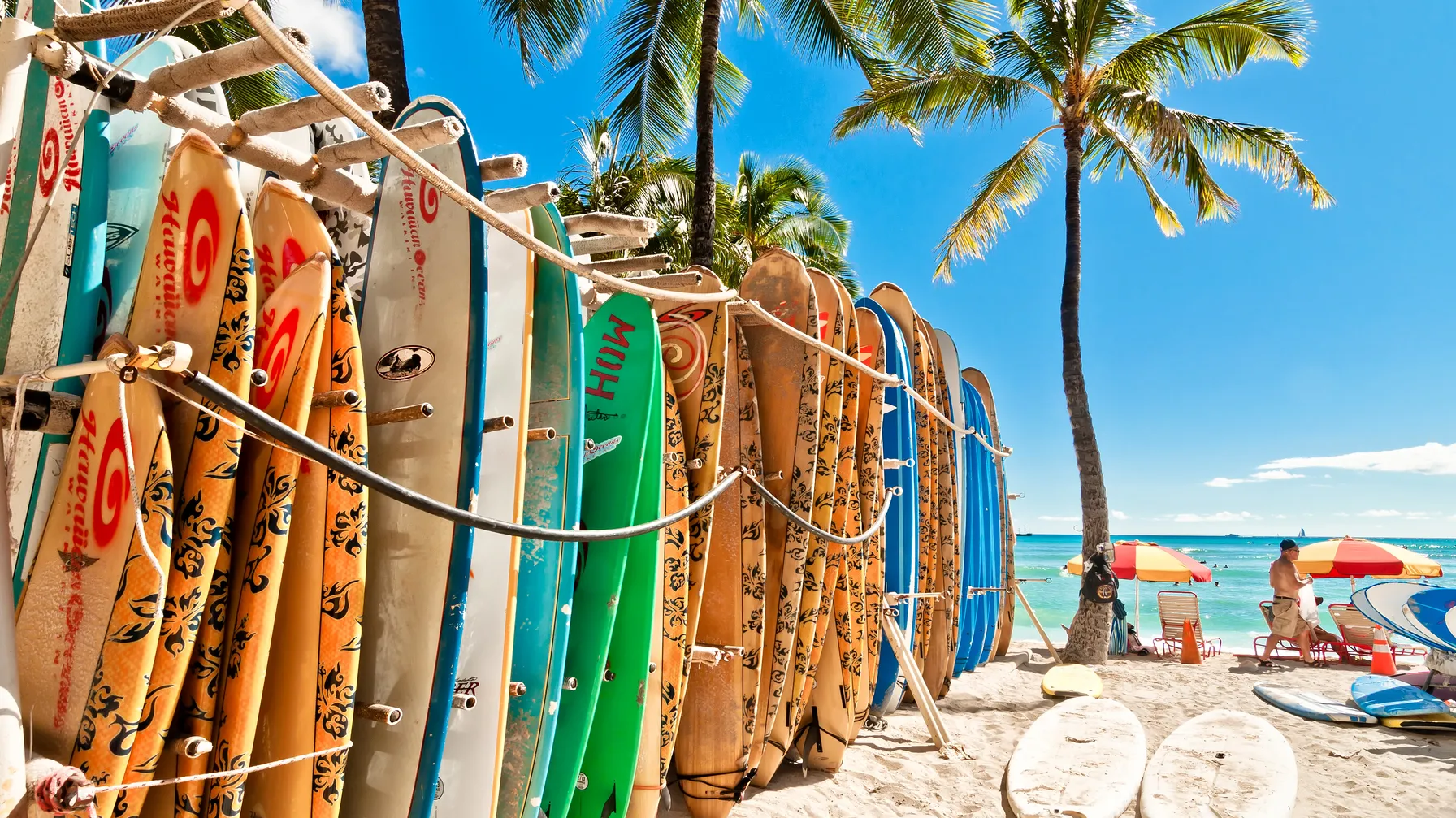
On the south coast of Oahu, in Honolulu, Waikiki Beach offers a completely different atmosphere. The gentle and regular waves that break here make it the perfect place to start or progress. Many surf lessons are available directly on the beach, led by passionate local instructors. It's also the perfect spot for families or travelers who want to try the experience without pressure. Waikiki Beach is well suited for both a first session and a relaxed morning of longboarding, with the Diamond Head volcano in the background.
Maui, between giant tubes and perfect waves
The island of Maui is home to two world-renowned spots. Honolua Bay, on the northwest coast, produces a long, hollow right-hand wave particularly appreciated by advanced surfers, especially in winter. More spectacular still, Jaws (Pe'ahi in Hawaiian) features waves reaching up to 25 meters in height, cresting at nearly 48 km/h. At this level, surfers are towed into the waves by a jet ski. For those who prefer to observe, the surrounding cliffs offer an exceptional vantage point on this spectacle of nature.
Kauai and the Big Island, more intimate retreats
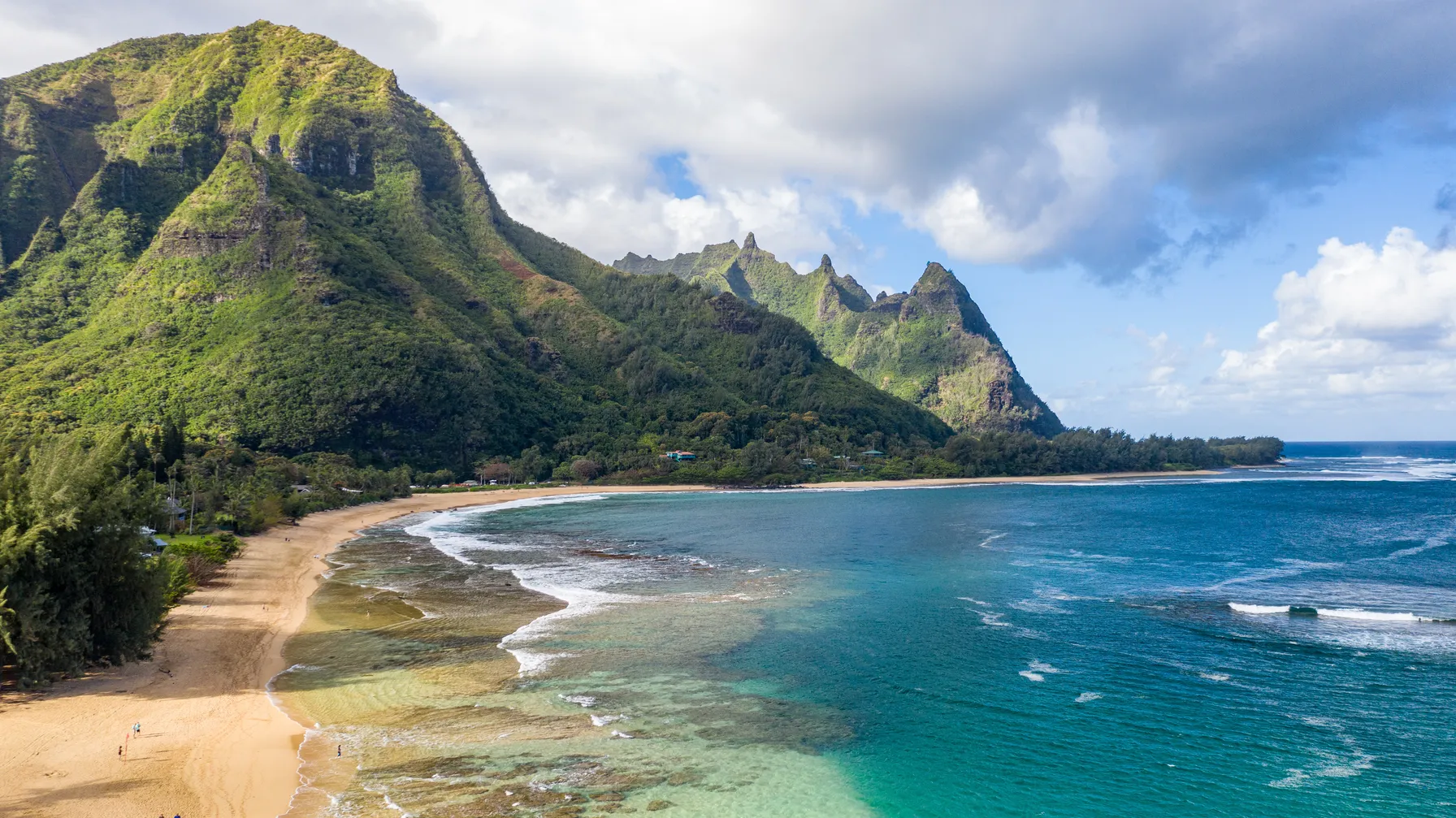
On Kauai, Hanalei Bay offers one of the most versatile experiences in the archipelago. It welcomes beginners on its calm sections as well as advanced surfers in the eastern part of the bay. On the Big Island, Banyans mainly attracts locals and travelers who like to get away from the beaten path to share an authentic moment with the local surf community.
Contact us for more information on the best spots to discover during your Hawaii surfing trip.
What is the best time to surf in Hawaii?
Surfing in Hawaii is possible year-round, but conditions vary by season and coast. To choose the right time according to your level, here is a concise overview:
| Period | Coast | Conditions | Recommended level |
|---|---|---|---|
| November to April (winter) | North coast (Oahu, Maui, Kauai) | Powerful swells, towering waves | Intermediate to expert |
| November to April (winter) | South coast | Calmer waves | Beginner to intermediate |
| May to October (summer) | All coasts | Gentle waves, ideal conditions | Beginner to intermediate |
| All year | Waikiki Beach | Regular and accessible | All levels |
Tips from our Travel Planners: if you want to combine sightseeing and practice during your stay, prefer the period from November to February. You’ll enjoy the big waves of the North Shore while being able to get started at the protected spots in the south.
Book your Hawaii trip now and enjoy a 100% personalized itinerary tailored to your surfing preferences.
Demandez votre devis Hawaï sur-mesure 100% gratuit
 4.8
4.8+3.000 travelers satisfied
What essentials should you know before surfing in Hawaii?
Before getting on a surfboard in Hawaii, a few fundamental rules apply. On the water, priority goes to the surfer best positioned on the wave. Cutting another rider's wave is both dangerous and highly frowned upon, especially at spots frequented by locals who are particularly attached to their playground.
When it comes to equipment, the choice of a surfboard must match your level: a foam longboard for beginners, a shortboard for more technical riders. The leash is essential to prevent your board from becoming a danger to other surfers. Also remember to protect yourself from the sun, which is intense under the tropics, with waterproof sunscreen and, if possible, a Lycra rash guard or a lightweight wetsuit.
If this is your first experience, the surfing lessons offered in Waikiki or Hanalei Bay are an excellent starting point. In one to two hours, you’ll understand the basics and you’ll ride your first waves safely.
Frequently asked questions
Do you need a visa to go surfing in Hawaii?
Hawaii is part of the United States. French nationals do not need a visa for a tourist stay of less than 90 days, but must obtain an ESTA authorization before departure. This process is done online and must be completed at least 72 hours before boarding.
Can you rent surf equipment on-site in Hawaii?
Yes, the main beaches offer surfboard rentals directly on the beach or in nearby specialist shops. Notably in Waikiki, the options are very accessible, with boards suitable for all levels. It’s a practical option that avoids traveling with your own equipment.
Which island should you choose for your first surfing trip in Hawaii?
Oahu is often recommended for a first stay, as it combines the best spots for all levels. Waikiki Beach is perfect for beginners, while the North Shore offers spectacular sessions. It is also the best-connected island in terms of flights and accommodations.
Are there any particular risks associated with surfing in Hawaii?
As with any surf spot, caution is essential. Some spots have shallow coral reefs and strong currents. It is strongly recommended never to surf alone, to carefully assess the conditions before entering the water, and never overestimate your ability. At the most challenging spots like Banzai Pipeline or Jaws, watching from the beach or cliffs is the best option for beginners.