What to do in Yogyakarta: the guide to must-see experiences in Java
What to see and do in Yogyakarta within the city itself?
Yogyakarta is not just a simple starting point toward its famous temples. It is, in itself, a destination in its own right, where Javanese culture expresses itself in every detail: the architecture of the alleyways, the scents of the markets, the sounds of a gamelan around a courtyard. Taking the time to explore the city is to offer yourself an authentic immersion in the soul of Java.
The Kraton district, between the royal palace and street art
In the heart of the city, the Kraton district is the ideal starting point for visiting Yogyakarta. It houses the Sultan's Palace, the official residence of the Sultan of Yogyakarta, who holds this unique role of sovereign and governor of the region for centuries. Part of the palace is open to the public, allowing visitors to discover traditional Javanese architecture, historical collections and, on certain days, performances of traditional dances that attest to a living heritage of great richness.
A few steps from the palace, Taman Sari — the former summer residence built in the 18th century — deserves special attention. Its pools, underground tunnels and picturesque ruins evoke another era, that of a radiant sultanate. Plan about two hours to explore the entire site. As you stroll through the surrounding alleyways, you will discover discreet yet expressive street art painted on the walls of the district's low houses, which tells local traditions with contemporary creativity.
Our tip: if you visit the palace on a Sunday morning, cultural performances are often organized in the main courtyard. An ideal opportunity to immerse yourself in Javanese culture in an exceptional setting.
Malioboro Street and its Javanese flavors
It's impossible to talk about what there is to do in Yogyakarta without mentioning Malioboro Street, the city's most iconic shopping avenue. Lined with shops, street vendors and market stalls, it concentrates all of Jogja's energy from morning to night. The adjacent Beringharjo Market forms a true olfactory and visual labyrinth, where artisanal batiks, spices, tropical fruits and traditional objects can be found. At nightfall, Alun Alun Kidur Square comes alive around street food stalls offering delicious Javanese specialties, in a colorful atmosphere particularly appreciated by families.
Living crafts, an immersion in Javanese culture
Yogyakarta is also a city of workshops, where artisans carry on ancestral know-how. The lanes of the Kraton district are full of masters in the art of wayang kulit — leather-carved puppets listed as UNESCO intangible heritage — and in batik making, this exceptional textile whose patterns are created with hot wax before dyeing. Participating in a batik workshop means you'll leave with a unique creation and a memory that stays with you.
Contact us for more information about your stay in Yogyakarta
Which temples must you absolutely visit around Yogyakarta?
The Yogyakarta region is home to two of Southeast Asia's most impressive monuments. Each carries its own spiritual and architectural universe. Visiting them in one trip means embracing both the Buddhist and Hindu heritages of Java in a striking panorama of history.
The Borobudur Temple, the pinnacle of Buddhist world heritage
Located about 40 kilometers northwest of Yogyakarta, Borobudur Temple is the world's largest Buddhist temple. Erected in the 9th century by the Sailendra dynasty, this colossal monument spans nine terraces adorned with more than 2,600 bas-reliefs and 72 openwork stupas, with each level corresponding to a spiritual step on the path to nirvana. Visiting Borobudur is to undertake a symbolic ascent through the ages.
Access to the summit of the structure, with guided tour included, offers a breathtaking panorama of the valley and the surrounding volcanoes. The morning slots remain the calmest, with a golden light that enhances the temple's gray stones. Plan half a day to fully enjoy this extraordinary experience.
Did you know? Places are limited to 1,200 visitors per day and tickets can be reserved on the official Borobudur Park site. In peak season, it's better to plan ahead.
Prambanan Temple, Hindu grace at sunset
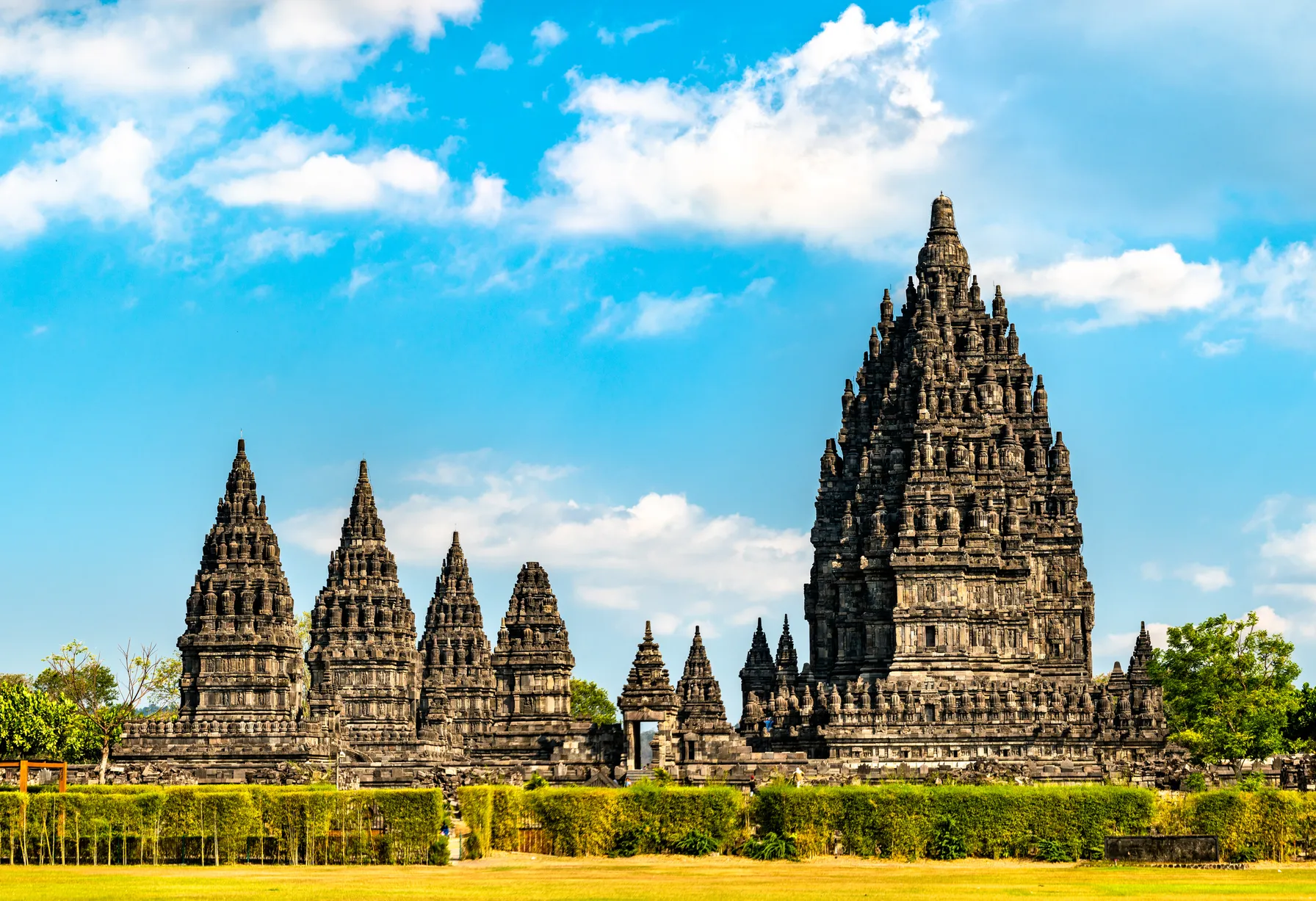
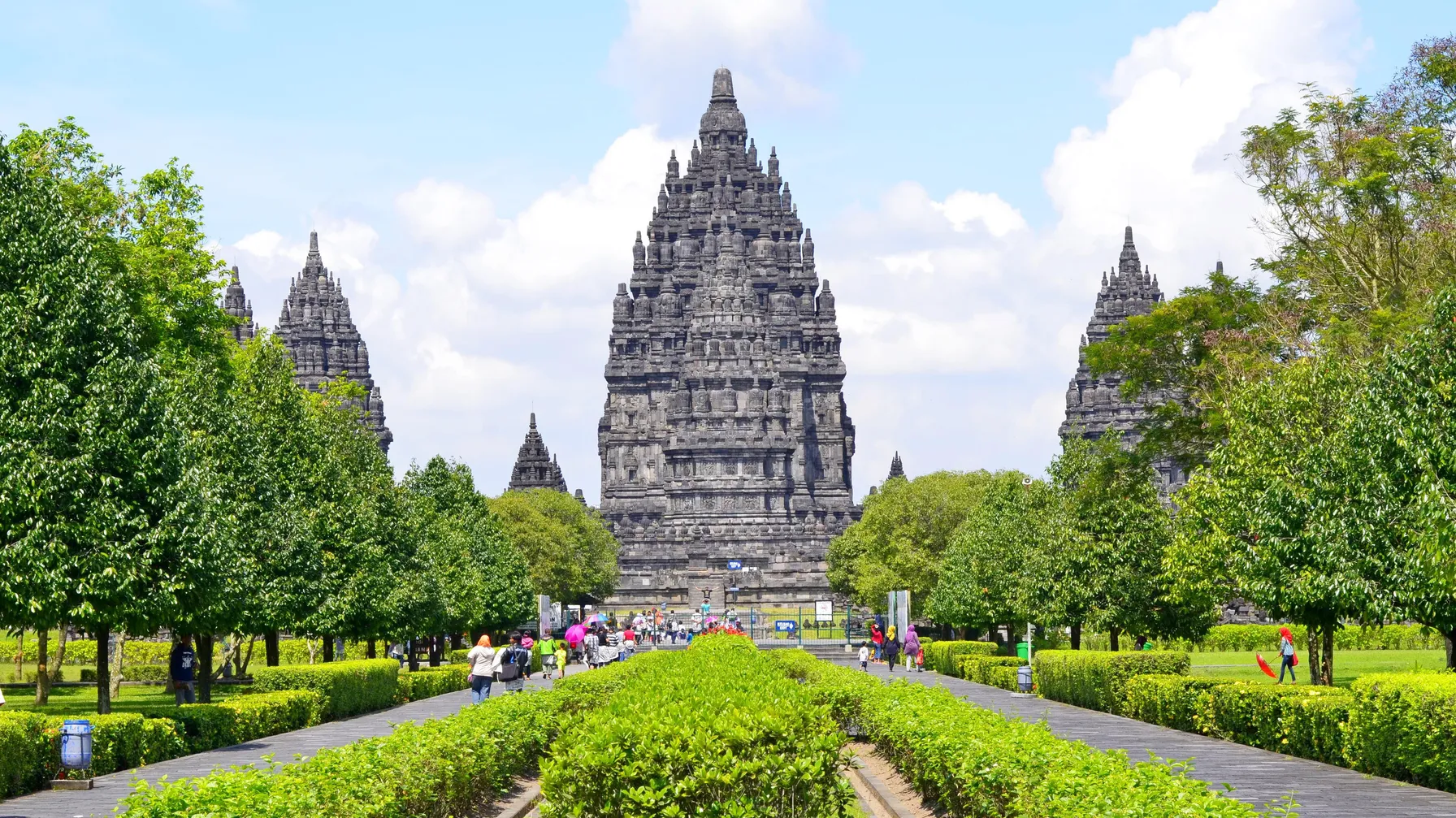
About fifteen kilometers east of the city, Prambanan Temple is the largest Hindu complex in Indonesia, also a UNESCO World Heritage Site. Its slender 47-meter towers, dedicated to the Trimurti — Brahma, Vishnu and Shiva — rise with rare elegance, carved with epic episodes from the Ramayana. For a visit to the temple under ideal conditions, arriving in late afternoon allows you to enjoy the sunset, which tints the stones with an unforgettable golden warmth.
To plan your Borobudur and Prambanan visit, here are the essential details to keep in mind:
- Borobudur Temple: ticket with summit access at 455,000 IDR per adult, visits from 8:30 AM to 3:30 PM;
- Prambanan Temple: entry at 400,000 IDR per adult, site open daily until 5:00 PM;
- A private driver for the day is the most comfortable option to visit both sites with complete peace of mind.
Book your trip to Yogyakarta now
Demandez votre devis Yogyakarta sur-mesure 100% gratuit
 4.8
4.8+3.000 travelers satisfied
What nature experiences can you have in the Yogyakarta region?
Beyond temples and urban bustle, the Yogyakarta region reveals natural landscapes of rare intensity. Active volcanoes, abyssal caves and terraced rice fields create an exceptional backdrop for lovers of vast spaces and adventure.
Mount Merapi, between an active volcano and stunning viewpoints
The Merapi volcano, one of the most active in Indonesia, looms over the northern part of the Yogyakarta region with an imposing presence. A jeep excursion on its slopes, organized very early in the morning, allows approaching the solidified lava flows, to pass through villages marked by past eruptions and to discover breathtaking viewpoints over the Javanese plain. It is an edge-of-the-world experience for those who wish to get away from beaten paths.
The tips from our Travel Planners: watching the sunrise from the heights of Mount Merapi is one of the rarest spectacles the region can offer. Plan a night outing to enjoy it under optimal conditions.
Caves, rice terraces and hidden landscapes of the island of Java
For those who want to explore even further, the island of Java still holds beautiful surprises around Yogyakarta. The Jomblang and Pindul caves, southeast of the city, offer two unforgettable experiences: the first is discovered by a descent by rope into a cavern pierced by a natural beam of light, the second is traversed by a raft on an underground river. To the north, the terraced rice fields of mountain villages stretch as far as the eye can see, ideal for a bike ride or a quiet hike, far from any bustle.
Contact us for more information about the best things to do in Yogyakarta