What to do in Oaxaca: the must-sees for a memorable stay
What are the must-see places to visit in Oaxaca?
Discovering the city of Oaxaca means allowing yourself to be surprised at every street corner. The historic center, listed as a UNESCO World Heritage site, concentrates much of what there is to see on a first visit, but the city has plenty of other surprises in store for those who take the time to venture there.
Santo Domingo and the historic center, the heart of World Heritage
The Santo Domingo Church stands as the city's absolute symbol. Built in the region's characteristic green stone, this Baroque church with its sumptuous interior decoration deserves a thorough visit. Allow about an hour to appreciate each detail, before continuing to the Museum of Cultures housed in the adjoining former convent. This museum gathers a remarkable collection of pre-Hispanic artifacts, including pieces from the Monte Albán excavations. Adjacent to the complex, the ethnobotanical garden offers an outdoor immersion in the region's endemic flora — a guided tour is mandatory to fully grasp its richness, and frankly enriching.
Two steps away, the zócalo, the large central square lively with musicians and street vendors, sets the rhythm of local life. It’s the perfect place to pause and enjoy a spiced hot chocolate, a local must-try specialty.
The neighborhoods of Jalatlaco and Xochimilco, between colors and street art.
For visiting Oaxaca from a livelier perspective, the Jalatlaco district stands out as an essential stop. Its flowering alleys, its colorful small shops and its murals make it one of the most photographed places in the city. Street art there is ubiquitous, often inspired by local traditions and Zapotec culture. Plan one to two hours to stroll there at a relaxed pace, taking care to step through the doors of the art galleries that dot the route.
The Xochimilco neighborhood, more preserved and less frequented, offers an atmosphere of a small village within the city. Its local craft workshops and its quiet alleys invite you to slow down and observe the daily life of the residents — a rare way to take care of your memories.
Monte Albán, guardian of Zapotec and Mixtec heritage
Perched at more than 2,000 meters above sea level, Monte Albán is one of the most impressive archaeological sites in Latin America. This ancient capital, shared between Zapotec and Mixtec civilizations, was carved at the top of a mountain leveled by human hands. The temples, the stelae, and the 360° view over the valley make it a fully immersive experience. Plan a half-day and opt for a guided tour to fully grasp the site's historical depth.
Book your trip to Oaxaca now and let our Travel Planners craft your tailor-made itinerary.
What culinary and cultural experiences can you have in Oaxaca City?
Experiencing Oaxaca also means diving into a gastronomic and artisanal culture of rare intensity. The city is recognized as one of Mexico's culinary capitals, and every meal, every tasting becomes a way to better understand the soul of the region.
Eating in Oaxaca: culinary specialties and vibrant markets
Oaxacan cuisine is inscribed on UNESCO's Intangible Cultural Heritage list, and a few meals are enough to understand why. The Benito Juárez Market and the 20 de Noviembre Market are two stops not to miss to taste the authentic flavors of the region: generous tlayudas, mole negro with seven ingredients, local cheeses, and grilled chapulines. Pasillo de Humo, in particular, is renowned for its grilled meats served in a lively, authentic market atmosphere — an unforgettable moment of sharing.
To go further, a cooking class with a local chef lets you learn how to prepare traditional recipes right in the host's home. It’s an experience that is as convivial as it is instructive, especially appreciated by families and couples seeking authentic discovery.
Our Travel Planners' advice: if your stay coincides with the Day of the Dead, late October and early November, seize this rare opportunity. The city of Oaxaca then becomes a living tableau of unique emotional intensity, with flowered altars, processions, and traditional music.
Mezcal, art galleries and living traditions
It is hard to visit Oaxaca without taking an interest in mezcal. This spirit distilled from agave is at the heart of local culture. Visiting a palenque — the name given to an artisanal mezcal factory — helps understand the ancestral production process, from cooking the piñas in earthen ovens to distillation in traditional alembics. Several establishments offer guided tastings, ideal for introducing both novices and connoisseurs.
Besides the flavors, the city also has numerous art galleries that blend contemporary influences with pre-Hispanic references. These spaces, often intimate, provide a fresh perspective on the creativity of today’s Oaxacan artists.
Contact us for more information and design your tailor-made stay in Oaxaca with our Travel Planners.
What to do around Oaxaca on day trips?
The region around Oaxaca is full of natural sites and artisan villages that are well worth a visit. About an hour's drive from the center, several destinations enhance and complement the city's experience.
Hierve el Agua, between petrified cascades and natural pools
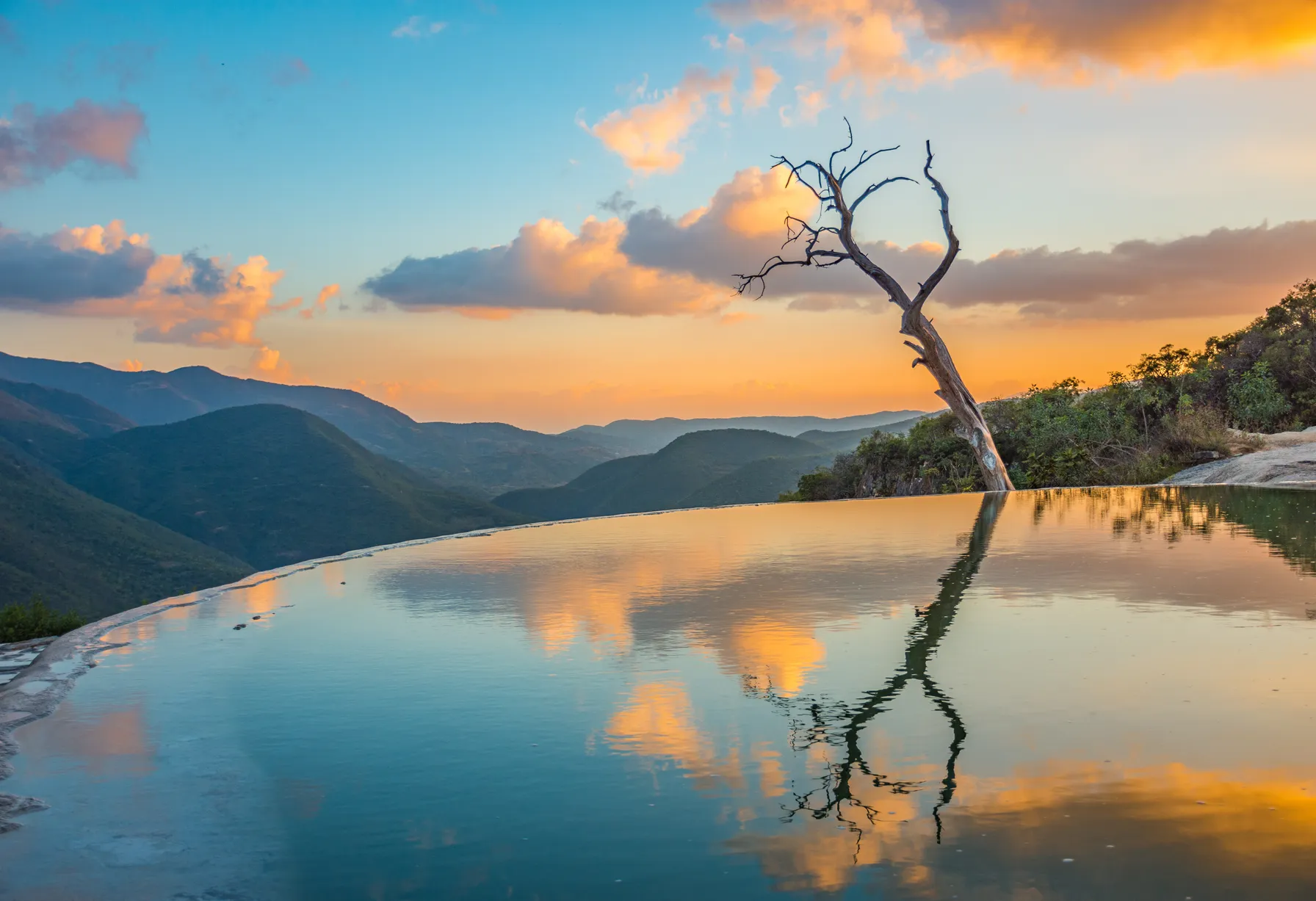
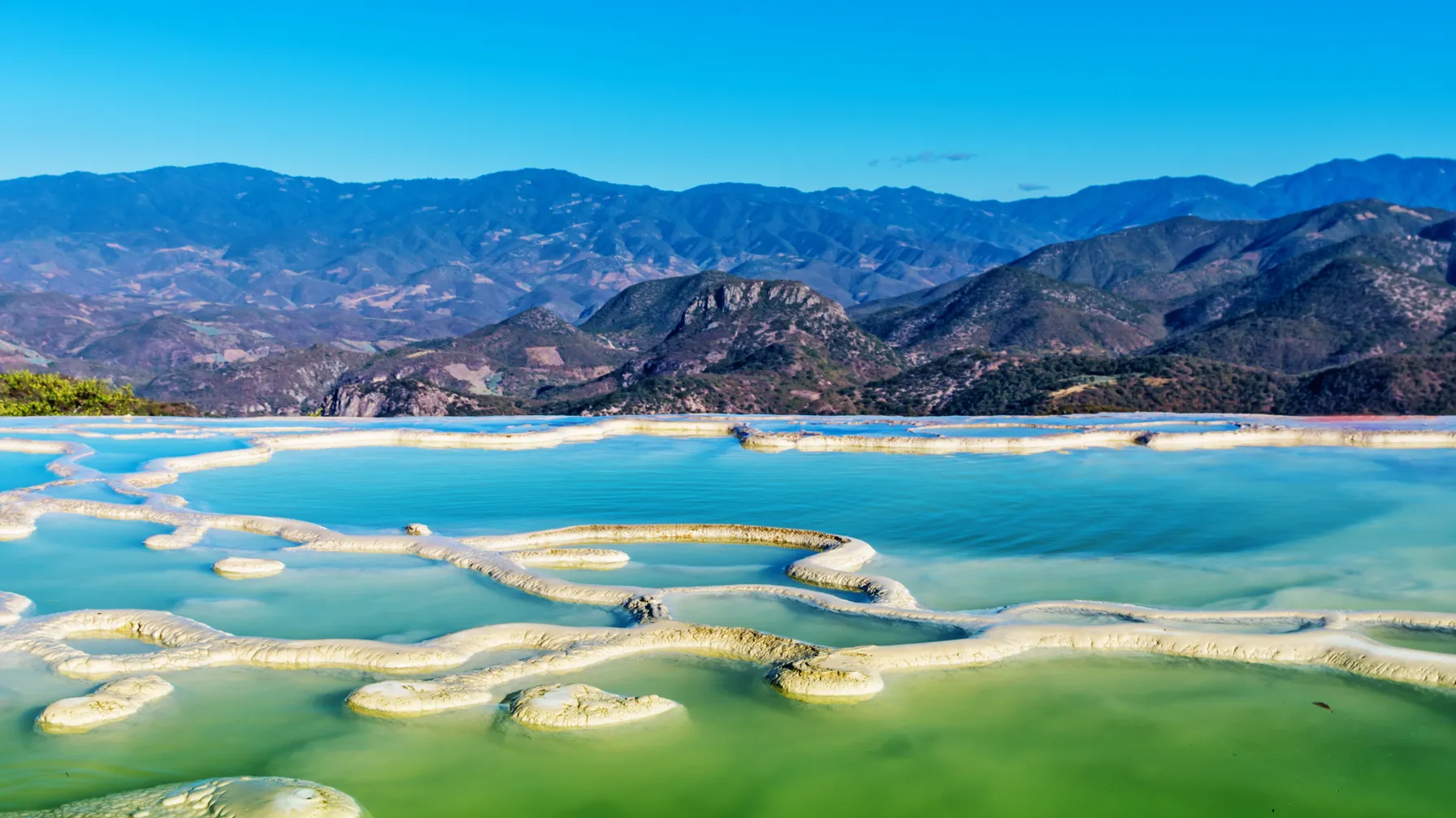
About 70 kilometers from Oaxaca de Juárez, Hierve el Agua is one of the region's most striking natural sights. These petrified waterfalls, formed by calcium deposits accumulated over millennia, overlook the valley and offer an exceptional panorama. Natural pools fed by mineral springs allow you to swim outdoors while enjoying the surrounding landscape — a rare moment, at the edge of the world. Plan a half-day and don't forget your swimsuit. The road to reach it can be winding, so it is advisable to book a guided excursion to reach the site under the best conditions.
The artisanal villages, from Teotitlán del Valle to San Bartolo Coyotepec
Around Oaxaca, several villages stand out for a craft handed down from generation to generation. Teotitlán del Valle is renowned for its handwoven carpets made with natural dyes, in a Zapotec tradition dating back several centuries. San Martín Tilcajete is, for its part, the village of alebrijes, those animal-shaped wooden sculptures painted in vivid colors that delight lovers of folk art. San Antonio Arrazola shares this same tradition with pieces just as remarkable, while San Bartolo Coyotepec is famous for its black pottery worked without a potter's wheel using ancestral techniques.
These villages are ideally visited as part of a combined day trip, to optimize the route and enjoy the explanations of a local guide who brings each place and each artisanal gesture to life.
Book your trip to Oaxaca now and leave every detail of your stay to our experts.
Demandez votre devis Oaxaca de Juárez sur-mesure 100% gratuit
 4.8
4.8+3.000 travelers satisfied